

Ethel Payne is a legend of the African-American press. This great woman was a famous journalist and civil rights activist. Throughout her career, she witnessed the most important moments in the life of the United States and wrote about them in The Chicago Defender. Ethel was included in the White House press secretaries. She began working on radio and television, covering the Korean War and the civil rights movement. Discover more about her life and career on chicagoka.com.
Childhood and adolescence
Ethel L. Payne was born on August 14, 1911 in the family of William and Bessie Payne in Chicago. Her paternal grandparents lived in slavery until the end of the Civil War. The girl’s father worked as a porter for the Pullman company. Her mother was a housewife, raising six children. As a child, Ethel loved to read, especially the poems of Paul Dunbar. The girl received her primary education at Lindblom Technical High School. Her favorite teacher was Margaret Dixon, who had taught Ernest Hemingway. It is important to note that from the junior high school, Payne endured ridicule and even beatings from her classmates, as she was black. When Ethel was 12 years old, her father passed away. To feed her large family, the widow had no choice but to provide shelter for boarders and sell hand-painted porcelain. Having saved up money, Bessie opened a boarding house and began to teach Latin there.
The beginning of activism
In 1930, Payne graduated from school and decided to defend the oppressed. While studying English and history at a community college and working as an assistant at the Chicago Public Library, Payne became involved in activism with the local NAACP. She organized community programs at her church to reduce juvenile delinquency.
As an activist, Payne helped organize the city’s contingent for the March on Washington in 1941. Leader, Philip Randolph, had high hopes that the threat of a mass rally would force the federal government to end segregation in the military and address the employment inequality of African-Americans. Faced with the threat of a 100,000-strong march on the capital, Franklin D. Roosevelt signed Executive Order 8802, which created the Fair Employment Practices Committee and prohibited government discrimination on the basis of race and religion. In response, Randolph cancelled the rally.
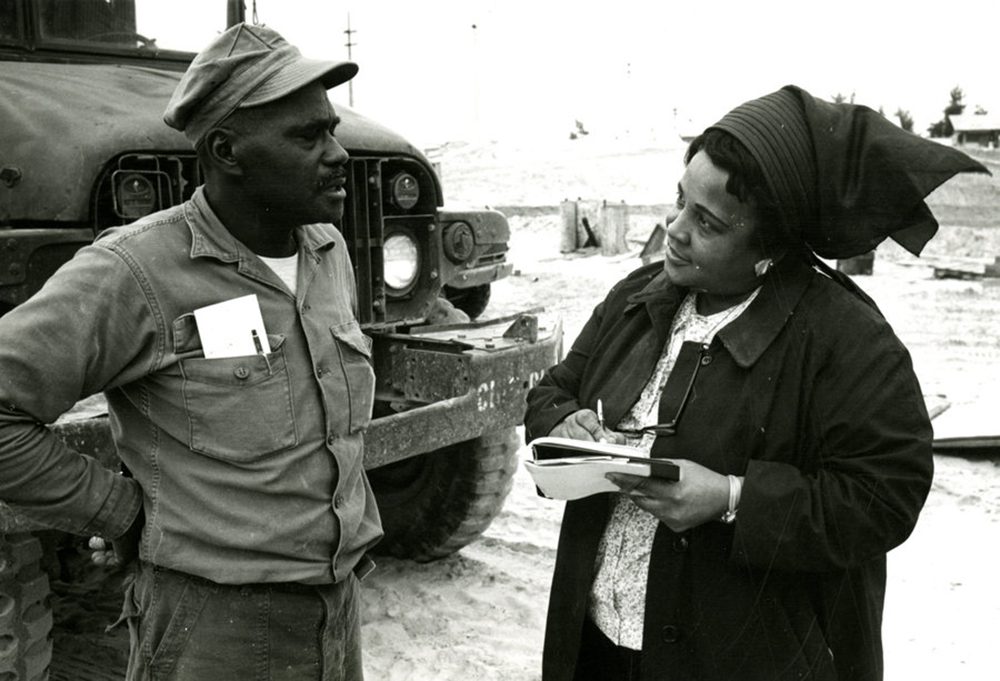
In the early 1940s, disappointed by her failure to enter law school, Ethel went to Tokyo. When the Korean War began in 1950, she addressed African-American soldiers in her diary. In addition, Payne wrote about the segregation of troops, the racial slurs that were constantly used against them and mentioned children who became orphans simply because they were born to Japanese mothers and black fathers. Ethel showed her diary to reporter Alex Wilson. After reading a few excerpts, he asked her to send the entries to The Chicago Defender, an African-American community newspaper.
Ethel’s articles about the events of the Korean War increased the newspaper’s circulation. At the same time, they were criticized. The woman began to be accused of hurting the morale of the troops with her honesty and straightforwardness. Soon, her articles were seen by the editor-in-chief and offered her a permanent job at the newspaper. In 1951, Payne began writing for The Chicago Defender.
Development of a reporting career
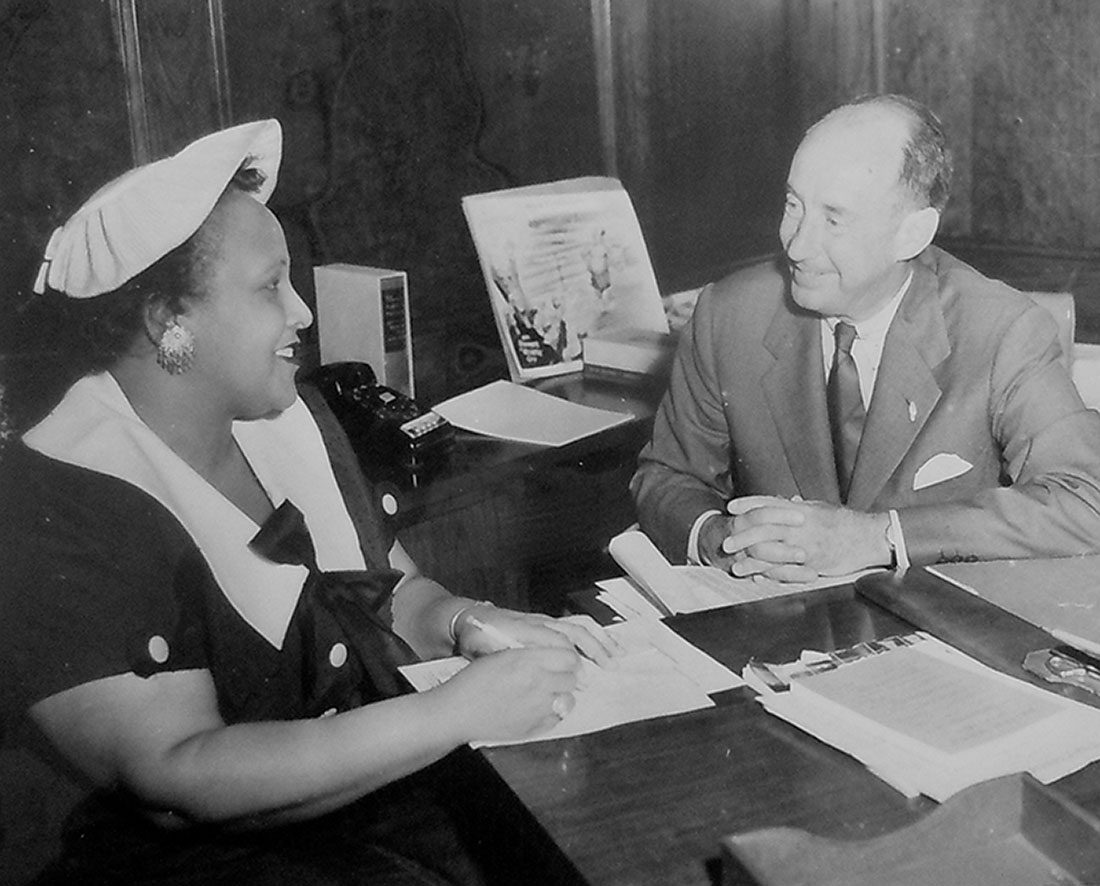
Working as a reporter, Payne tried to cover stories that were rarely discussed. She paid particular attention to the crisis of adoption of African-American children and the problems faced by unwed mothers. In 1951, Ethel moved to Washington and continued to write about historical events, especially the Army–McCarthy hearings. She also covered the civil rights movement that grew in the 1950s and 1960s. At that moment, Payne realized that desegregation would not happen only if certain measures were taken to encourage legislators to act. When the landmark Brown v. Board of Education case ended segregation in public schools, Payne noted that the date for school integration was unknown. She disliked the idea that desegregation could take years. It was Ethel’s ability to express her ideas in a concise and accessible manner that made her a great reporter.
Exposing a U.S. President
Ethel Payne was also the first African-American to serve on the White House press corps. While working as a newspaper correspondent, she was able to interview President Dwight D. Eisenhower several times about his civil rights choices. Payne was not afraid to ask the head of state why he had not allowed the Howard University choir to perform at the holiday. She continued to ask questions about immigration, segregation and discrimination in the United States. In the summer of 1954, Ethel again asked Eisenhower whether the people could count on the administration’s support in passing the bill regarding segregation on interstate travel. The president responded very sharply and unkindly, stating that officials were trying to do what they thought was right and fair and were not going to support one group or another. This response confirmed that the government had no business with the African-American community and its struggle for equal rights. After this conversation, the press reported that Eisenhower was dissatisfied with the questions asked of him by Payne. Thus, for the rest of his presidency, he refused to communicate with the correspondent. Press secretary, James Hagerty, tried to ruin her reputation. Hagerty investigated Payne, including examining her tax returns. Despite this, Ethel continued to work and draw attention to the civil rights movement.
The woman interviewed Martin Luther King Jr. before his name hit the headlines of national newspapers. Payne also traveled to the South to write The South at the Crossroads, which provided extensive coverage of the civil rights movement.
Ethel traveled abroad to cover international events. She attended the Asian-African Summit in Bandung, attended Vice President Nixon’s meeting with the King of Ghana and wrote about the Vietnam War.
Later years
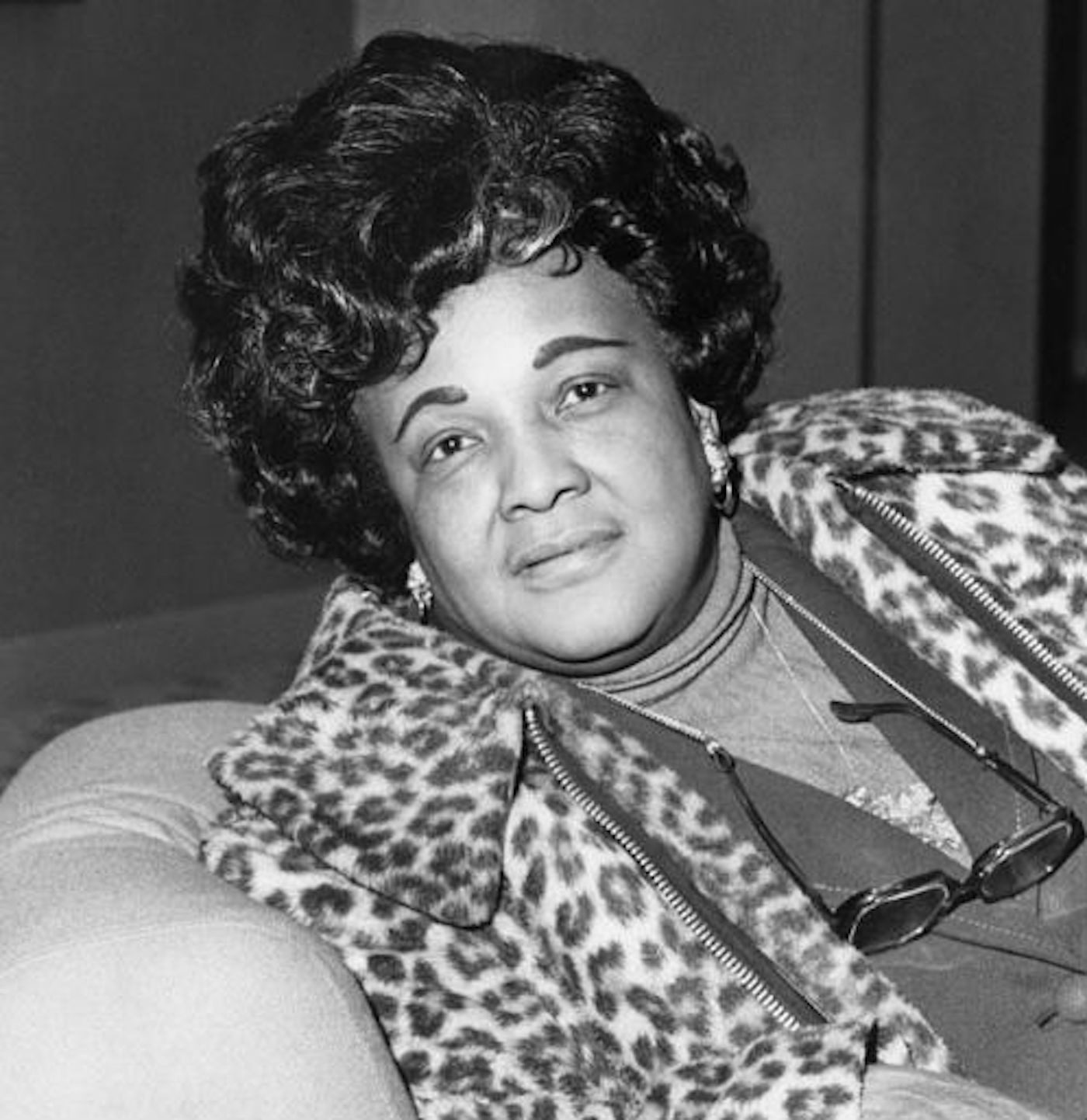
In 1970, Payne overcame another obstacle by becoming the first African-American woman to appear on national television as a radio and television commentator. From 1972 to 1982, she worked for CBS. In 1978, she was forced to leave the newspaper. Within a year, she had taken a professorship at the School of Journalism at Fisk University in Nashville, Tennessee. Ethel continued to write and actively advocate for the release of Nelson Mandela.
Ethel Payne died of a heart attack on May 28, 1991. Leading an honest life, this woman earned a positive reputation. She was remembered for her straightforward writing style and the important questions she asked influential people without hesitation.