

Christopher Crosby Farley remains one of the most vibrant yet tragic figures in the history of late 20th-century American comedy. His name is synonymous with fearless physical humor, explosive energy, and a comedic style that pushed every boundary. In his relatively short life, Farley became a cult icon in both television and film, a pillar of the legendary “Saturday Night Live” cast, and a beloved public figure whose influence on the genre is still deeply felt today. Read more about his journey on chicagoka.
Early Life and Wisconsin Roots
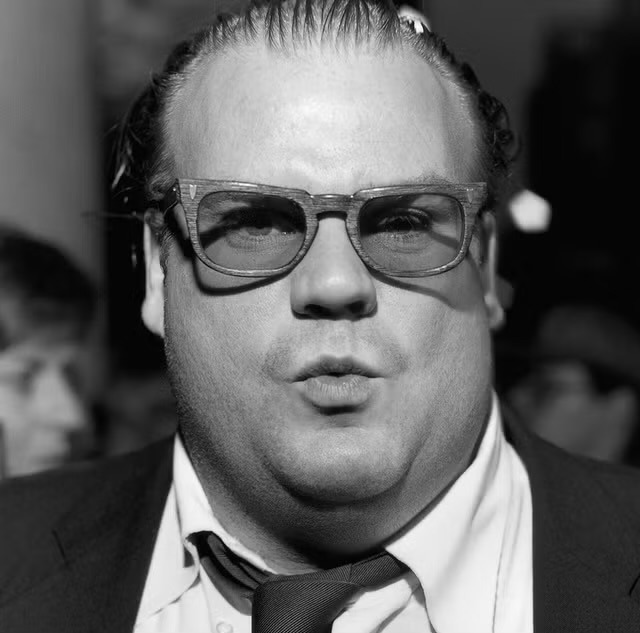
Christopher Crosby Farley was born on February 15, 1964, in Madison, Wisconsin. He grew up in a large, close-knit Irish-American Catholic family. His father, Thomas John Farley Sr., owned an oil distribution company, while his mother, Mary Anne Crosby, focused on raising their five children. Growing up in the small town of Maple Bluff, Farley’s childhood was anchored by family traditions, religion, and a love for sports.
He attended Catholic schools in Madison, including Edgewood High School of the Sacred Heart, and was a regular at church services. Farley spent much of his youth at Red Arrow Camp in Wisconsin, a place where his natural charisma and boisterous comedic temperament first began to shine.
The Path to Improv Mastery
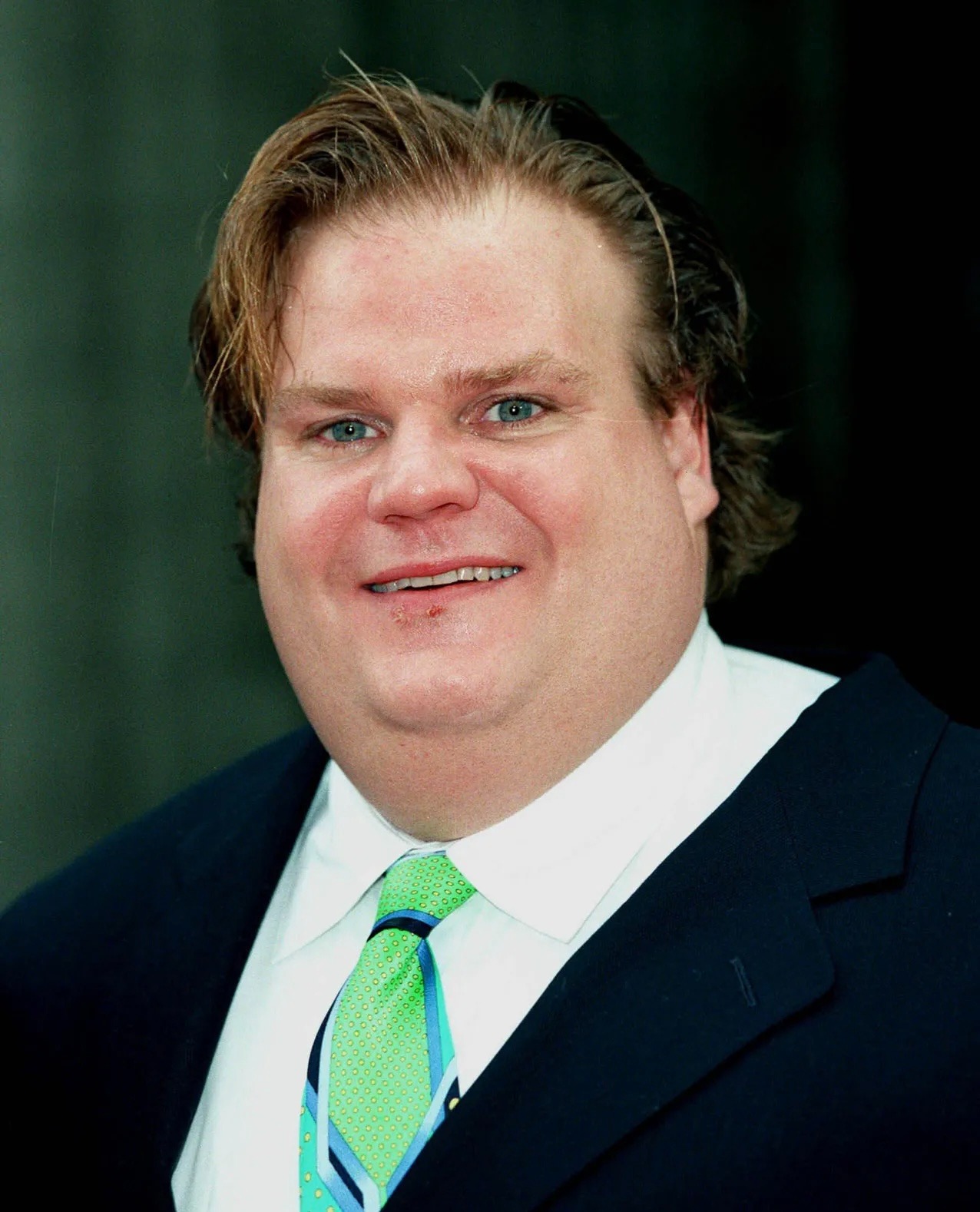
After high school, Farley attended Marquette University, graduating in 1986 with a degree in communications and theater. During his college years, he played rugby—a sport that undoubtedly influenced his high-impact, physical approach to comedy. It was during this time that he realized the stage was his true calling.
Farley cut his teeth at the Ark Improv Theatre in Madison. After graduation, he briefly worked for his father’s business but quickly realized he belonged in show business. This led him to Chicago, the ultimate proving ground for American improvisational theater.
In Chicago, Farley started at Improv Olympic before joining the legendary Second City. He began with the touring company and was promoted to the prestigious Mainstage in 1989. At Second City, he refined the style that would make him famous: a mix of over-the-top physicality, self-deprecation, and raw emotional vulnerability. Interestingly, Farley started at Second City on the same day as Stephen Colbert. His peers already recognized him as a unique force, capable of turning any simple sketch into an explosive, unforgettable scene.
The Saturday Night Live Era
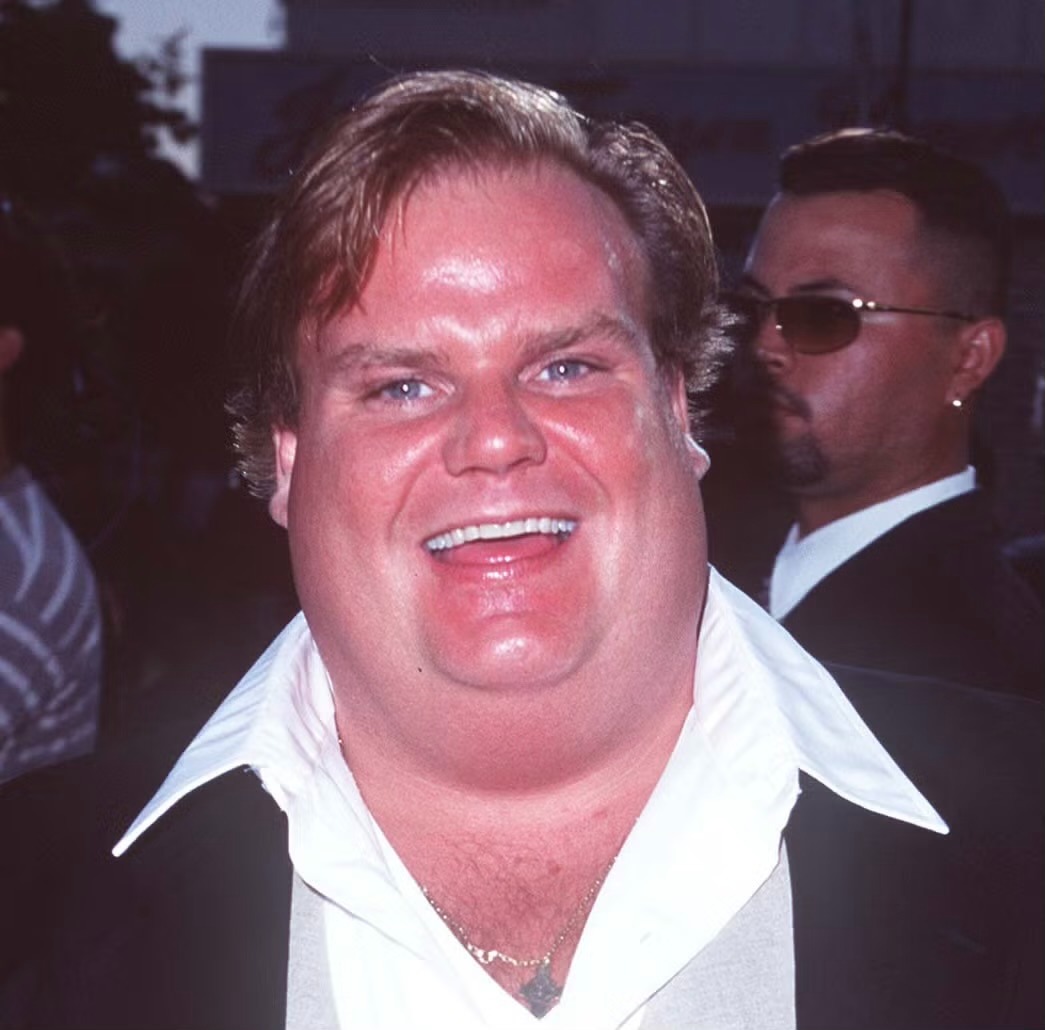
In 1990, Farley joined the cast of NBC’s “Saturday Night Live.” Alongside Chris Rock, he was part of a new wave of talent that fans dubbed the “Bad Boys of SNL.” Farley became close collaborators with Adam Sandler, David Spade, Tim Meadows, and Rob Schneider. His most famous characters, such as the sweating, frantic motivational speaker Matt Foley—known for his signature warning about living “in a van down by the river”—became instant classics. Other legendary bits included the Chippendales dance-off, Bill Swerski’s Superfans, “The Chris Farley Show,” and his uncanny celebrity impressions.
While dominating late-night TV, Farley also successfully transitioned to the big screen. Early roles in “Wayne’s World,” “Coneheads,” and “Airheads” paved the way for his leading-man success. His real breakthrough came with “Tommy Boy” and “Black Sheep,” where his “odd couple” chemistry with David Spade earned them massive popularity and box-office success. “Beverly Hills Ninja” further established him as a bankable star. His final completed projects, “Almost Heroes” and “Dirty Work,” were released posthumously, cementing his legacy as a comedy heavyweight.
Farley was known for giving 110% to every role, but his off-screen behavior was often erratic. In a shocking move in 1995, NBC fired both Farley and Adam Sandler, a decision that proved to be a major turning point in his career.
The Projects That Might Have Been
One of the most famous “what ifs” in animation history is Farley’s involvement in “Shrek.” He had recorded nearly 90% of the lead character’s dialogue before his death. After he passed, Mike Myers was brought in to re-record the role. According to his family, Farley’s version of the ogre was much closer to his own personality—a misunderstood soul trying to do good. Farley was also attached to several other high-profile projects, including a biopic of silent film star Fatty Arbuckle and an adaptation of the novel “A Confederacy of Dunces.”
A Battle with Addiction
Throughout his adult life, Chris Farley struggled with severe drug and alcohol addiction. He cycled through numerous rehab programs, but relapses became increasingly frequent. SNL producer Lorne Michaels and Farley’s managers made several attempts to intervene and save his life, but the actor’s physical and mental health continued to decline. His final hosting appearance on “Saturday Night Live” in October 1997 left colleagues and fans deeply concerned due to his visible exhaustion and strained voice.
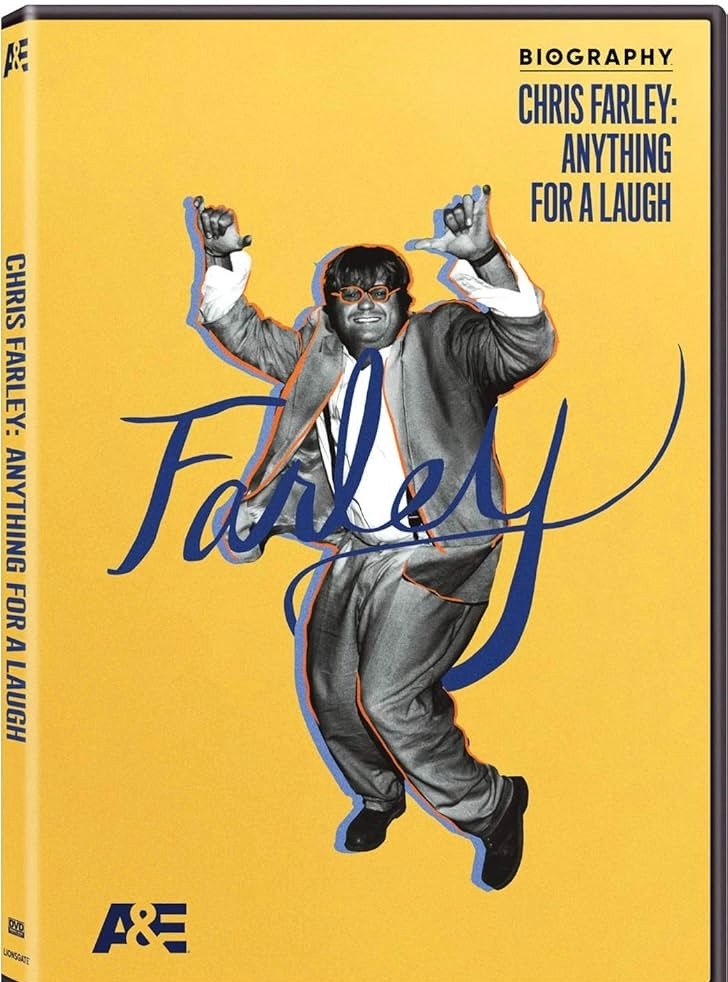
On December 18, 1997, Chris Farley was found dead in his Chicago apartment at the age of 33. The cause of death was an accidental drug overdose, complicated by heart disease. His funeral in Madison was attended by hundreds of friends and comedy legends, a testament to the massive impact he had on the industry. Farley is often compared to his idol, John Belushi—not just for his comedic style, but for the tragic similarities in their lives and early deaths. In 2005, Farley was posthumously honored with a star on the Hollywood Walk of Fame. His life has been the subject of documentaries, books, and musical tributes, including a heart-wrenching song by Adam Sandler. As of 2024, a new feature-length biopic about his life is reportedly in development.
Farley’s work stands as a masterclass in total commitment to the craft, while his life serves as a poignant reminder of the pressures of fame and the fragility of the human spirit. Though his time was short, Chris Farley’s name is forever etched into the landscape of American culture