

John Watson was a highly respected psychologist who contributed significantly to the development of behaviorism. He is well-known for his work on the conditioning process, particularly the “Little Albert” experiment, which demonstrated that a kid can be conditioned by fear of previously neutral stimuli. Countless studies by this great man have shown that fear can extend to other related objects, according to chicagoka.com.
Childhood, youth years and career development
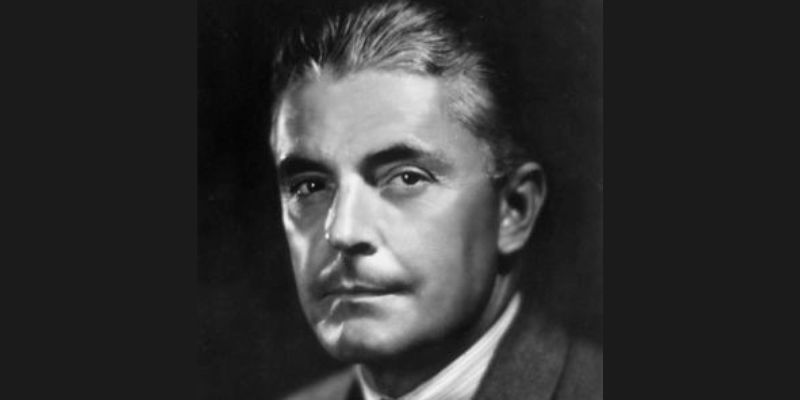
The future psychologist was born on January 9, 1878, in Greenville, South Carolina. The boy’s mother, Emma, was a religious person, so she named her kid after a Baptist priest in the hopes that he would join the clergy as a teenager, but this did not happen. John’s childhood was far from carefree, he grew up with a quick temper and frequently got into trouble. He was arrested twice for fighting and causing public disorder. Watson performed very poorly at school, and teachers regularly complained about him to his parents.
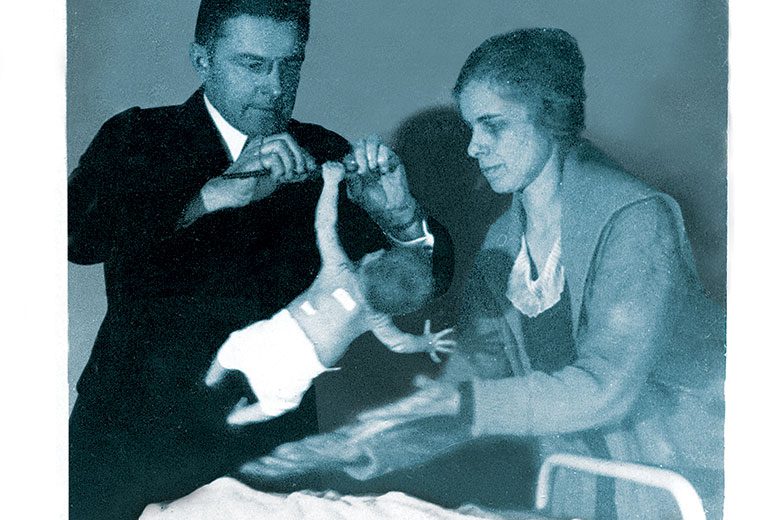
At the age of 16, through his mother’s connections, he entered Furman University. After earning his master’s degree five years later, John enrolled in the University of Chicago‘s psychology program, where he developed his own unique theories on behavior. In 1903, he presented his dissertation at the university, earned a PhD in psychology and stayed there as a research professor. In 1908, Watson began working as a lecturer at Johns Hopkins University. In 1919, he published his work “Psychology, from the Standpoint of a Behaviorist”, which marked the introduction of behavioral psychology. The University’s archives still hold a sizable collection of photographs from 1917 that depict his experiments, several of which involved infants.
Watson promoted views on raising children, which many people found cruel. He believed that expressing excessive care for the child is a serious mistake since it increases their emotional attachment to the parents and complicates their development as a person. Watson claimed that children who are able to move independently should be regarded as adults.
Scandalous experiment
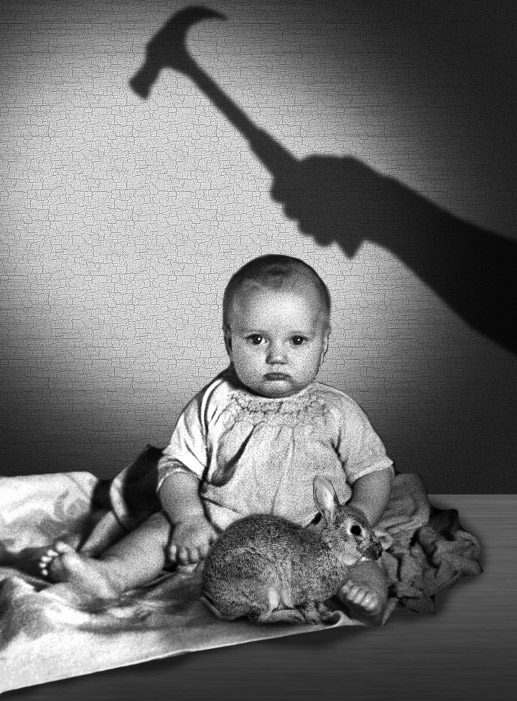
In their “Little Albert” experiment, John and his colleague evoked the fear of a white rat in a 9-month-old baby. They accomplished this by repeatedly giving the baby a rat, accompanied by a loud sound. Thus, they were able to demonstrate that fear may be transmitted to different objects. The ethics of this study are being questioned today, particularly because the child’s fear was never overcome.
In 2009, scientists suggested that Little Albert was a boy named Douglas Merritte. For decades, many people have been curious about what happened to the child. Researchers discovered that the kid died at the age of six years.
Retribution for betrayal
While working at Johns Hopkins University, where he was well-liked and respected, as well as being married to Mary Ickes, Jones had an affair with graduate student Rosalie Rayner. His wife belonged to a prominent family and lived with her parents. Mary found out about her husband’s affair and planned revenge. When the Rayners invited them to dinner, she pretended to be feeling unwell and said she would go upstairs to rest. Under this excuse, she searched the room and discovered letters written by Jones to his mistress. The betrayed woman then filed for divorce from her husband and used the letters as evidence. Many of them eventually made it to the newspapers. In 1921, she received a divorce and good compensation, and just a few days later Watson married Rayner. They did not live together for long, though, at the age of 36, his new beloved died. When colleagues learned of the man’s despicable act, they were shocked and demanded his resignation. Watson made no attempt to resist. After leaving teaching, he pursued a career in advertising, rising to a senior position in only two years. Unable to make a living, Jones joined the J. Walter Thompson agency and became a pioneer in the use of psychology in advertising. Using behavioral psychology, he persuaded customers to purchase goods.
Contribution to psychology
In 1913, Watson published his groundbreaking work on behaviorism titled “Psychology as the Behaviorist Views It”. Since there was insufficient evidence in this theory for a precise mechanism of behavior, many of Watson’s colleagues refused to accept his hypotheses as scientifically based. “Psychology from the Standpoint of a Behaviorist”, published in 1919, was well received, yet Watson’s behaviorism theories were rejected in academic circles.
Watson’s behaviorism theory focuses on people’s external behavior rather than their inner emotional and psychological states. He believed that a person’s physical reactions provided a single picture of their internal processes. He spent the majority of his career applying his theories to the field of child development and early learning.
Watson’s behaviorism had a lasting impact on the nature vs. nurture debate, and his research showed that early experience plays an important role in personality development. In addition, Watson paved the way for future behaviorists, namely B. F. Skinner. Some mental health experts apply behavioral psychology to help patients overcome phobias and fears. Furthermore, advertisers frequently utilize behavioral conditioning to persuade people to purchase goods.
The outstanding psychologist died in 1958. Before his death, the APA awarded him a gold medal for his contributions to psychology.