

Mae Jemison is an astronaut, engineer and the first African-American woman to go into space in 1992. She was one of seven crew members aboard the Space Shuttle Endeavour. Discover more about her unprecedented career success and how she became famous across America on chicagoka.com.
From Alabama to Chicago
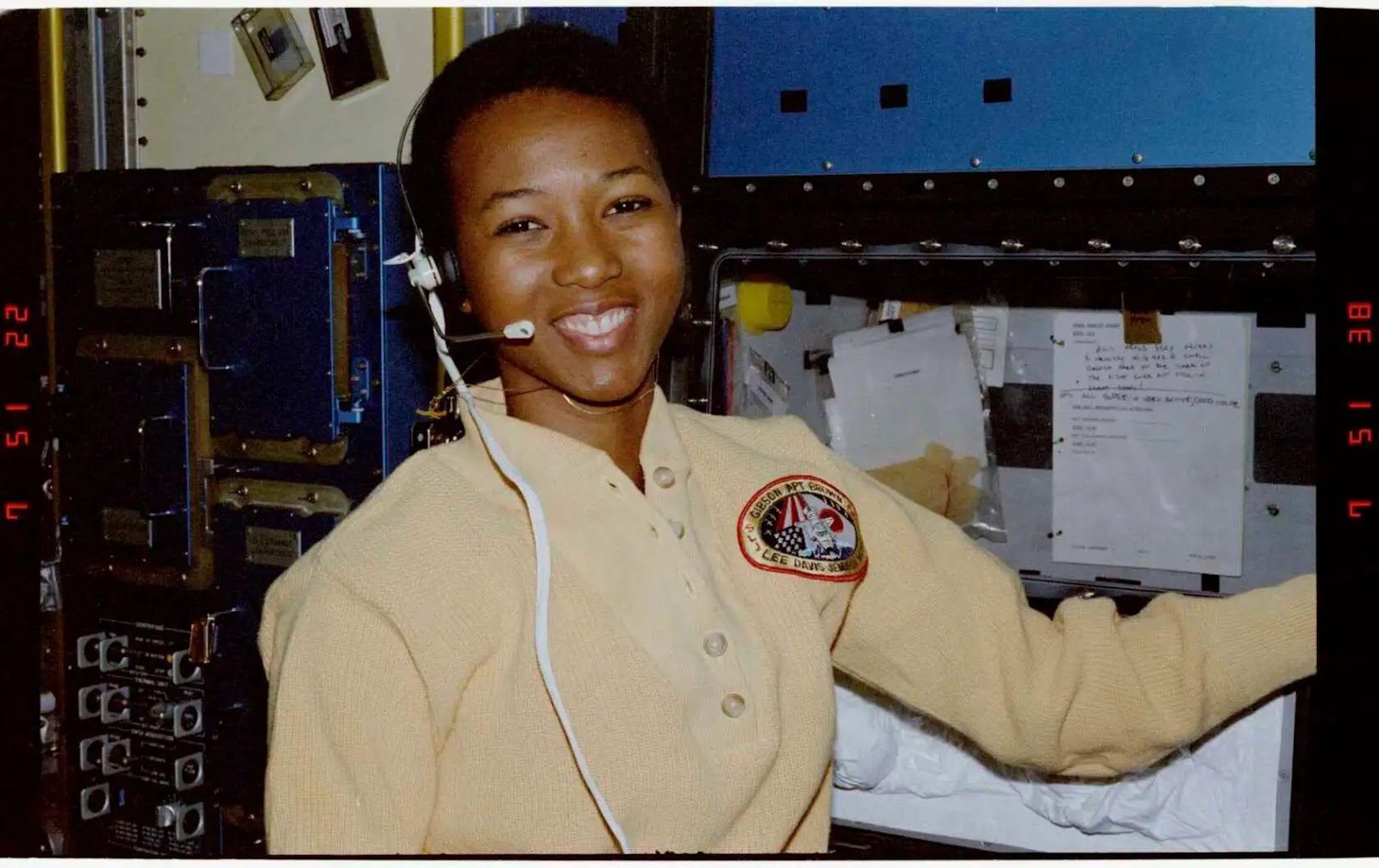
Mae C. Jemison was born in Decatur, Alabama, on October 17, 1956. She was the youngest of three children in the family. Three years after Mae was born, her parents lost their jobs and decided to immigrate to Chicago in search of a better life. The girl’s father, Charlie, was a roofer and carpenter. Her mother, Dorothy, was a school teacher. Charlie and Dorothy wanted to give their children all the best. They often took them to the Chicago Museum of Science and Industry and the Field Museum of Natural History. Mae began reading at an early age and regularly borrowed science books from the library, learning about evolution, dinosaurs, stars and planets.
At the age of 8, she began taking ballet lessons at the Sadie Bruce Dance Academy. This began her lifelong love of dance. Soon, the girl mastered modern dance at the Jane Addams Hull House Association Community Center. Difficult movements forced Mae to hone her skills.
While making progress in the study of natural sciences, the girl created projects dedicated to the evolution of life on the planet. Often visiting the Adler Planetarium, she carefully and curiously looked at the stars and was fascinated by what the sky looked like thousands of years ago.
One day, the Jemison family was forced to move. A fight broke out between Mae’s brother and members of a local gang. Her parents decided to move from the African-American Woodlawn neighborhood to Morgan Park. After moving, Jemison enrolled in Morgan Park High School and began performing on the musical theater stage, while also doing science projects. As part of one of them, she researched sickle cell anemia, which brought her victory in a city-wide competition. In 1973, Mae graduated from school and left Chicago for California. In California, she became a student at Stanford University. She graduated in 1977, receiving a Bachelor of Science degree in Chemical Engineering and a Bachelor of Arts degree in African-American studies. Mae’s studies did not end there, as she entered the Medical School of Cornell University. There, she was lucky enough to visit Cuba and conduct research for the American Medical Student Association. Soon, Mae became president of the Student National Medical Association chapter and coordinated regional health fairs. She also worked for a time in a refugee camp in Cambodia and Thailand. In 1981, Jemison graduated from medical school and completed an internship at the Los Angeles County Medical Center, before working as a general practitioner.
Africa and Peace Corps
While in medical school, Mae spent a summer in Kenya and East Africa. The trip was supported by a study grant from the International Travelers Association and a student loan. During the trip, she worked for the African Medical Education and Research Foundation (AMREF). Jemison and her colleagues conducted numerous surveys and population health assessments. After 8 weeks, Mae left Kenya and traveled to Egypt, Greece and Israel.
Her experiences abroad inspired Jemison to join the Peace Corps in 1983. There, she worked as a physician for two years, managing a medical office, laboratory and pharmacy. She was fascinated by the high-quality health care in developing countries. At age 26, she became the Peace Corps district physician in Sierra Leone and Liberia. She was responsible for the health of Peace Corps personnel and volunteers.
Path to the stars
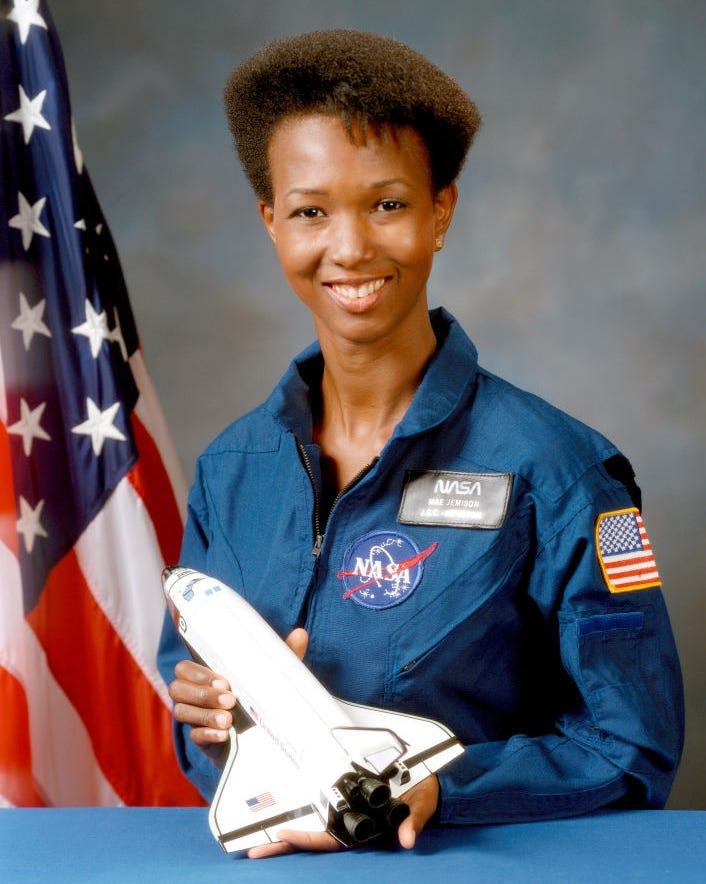
In 1985, Mae returned to the United States and changed her career from being a physician to becoming an astronaut, deciding to follow her dream. That fall, she applied for NASA’s astronaut training program. The Challenger explosion in the winter of 1986 delayed the selection process. She had to reapply a year later. Mae was lucky enough to be selected from 2,000 applicants to participate in the program.
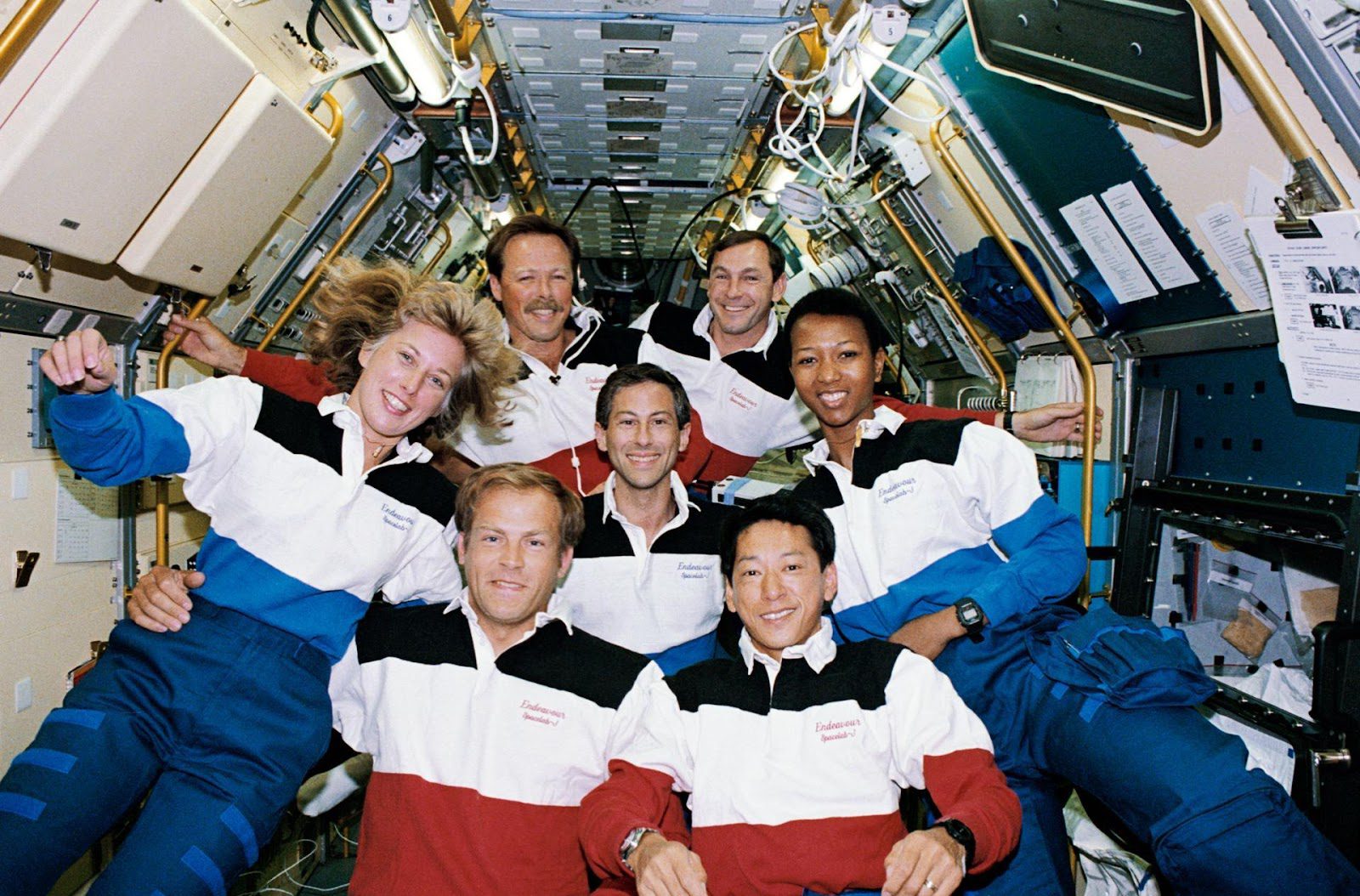
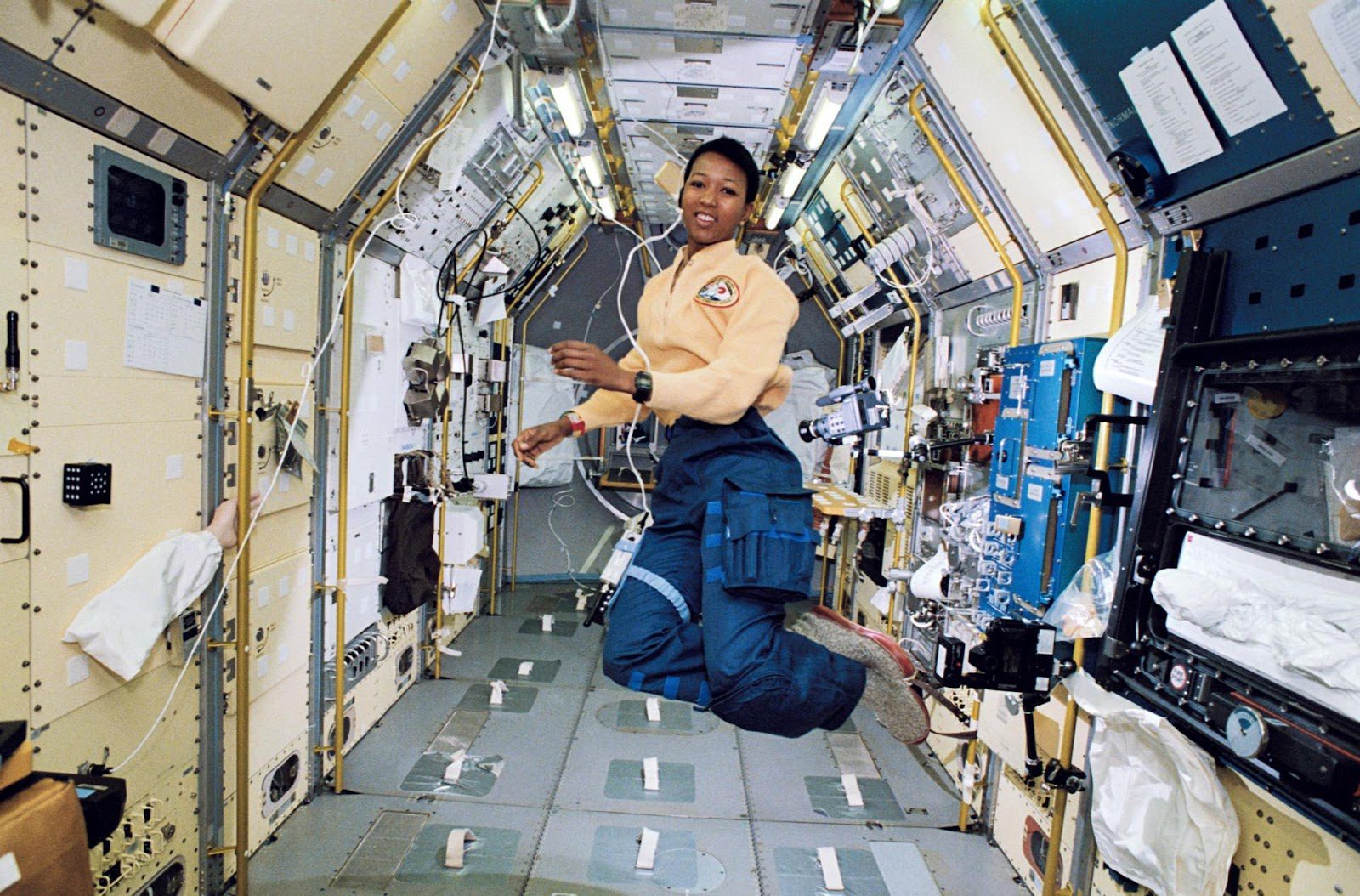
The woman made her first flight as part of the STS-47 crew aboard Endeavour in 1992, spending eight days in space. While in orbit, Jemison and her colleagues conducted 44 experiments, completing 126 orbits of the Earth. According to NASA, the research was in the field of materials science and covered several important areas, including biotechnology, electronic materials, fluid dynamics, glass, ceramics, metals and alloys. The crew used Japanese koi fish, cultured animal and plant cells, fruit flies and more as test subjects. On September 20, 1992, the crew returned to the Kennedy Space Center in Florida. Thus, Jemison became the first African-American woman to visit space.
In one of her books, Mae wrote that she believed from her childhood years that one day she would see space. Looking down and around her, she enjoyed the Earth, the Moon and the stars, understanding that everything in our world belongs to the Universe.
Introducing innovation and technology into her own projects
Mae continued to work at NASA as an astronaut for 6 years. In 1993, she decided to end her career and founded her own technology consulting company, The Jemison Group Inc., and the non-profit organization, the Dorothy Jemison Foundation for Excellence. Jemison always wanted to use her knowledge, skills and energy in various innovative directions. She opened a science camp, The Earth We Share, and continued to educate future generations by serving as a professor at Dartmouth College, teaching space technology and promoting its benefits to developing countries. Her company focuses on combining space and technology to improve everyday life for people on Earth.
In 2012, Mae created the unique 100 Year Starship initiative. It aims to enable human interstellar travel beyond the solar system within the next 100 years. She also serves on the boards of many prominent organizations. Jemison hopes that through her work, she can help ensure that all people know that they have a place in this world.
As of 2025, Mae Jemison lives in Houston, Texas. She continues to adhere to her principles, which states that everyone should benefit from the bounty of this planet and its resources. Solutions, technologies and systems are sustainable and useful when they are created with the full spectrum of human perspectives, skills and talents in mind. She continues to inspire her students and people of all ages to reach for the stars and space.
Altogether, we can conclude that Mae Jemison is a talented, courageous, responsible woman who has spent her life trying to help people and prove that innovation and technology are important not only in science but also in everyday life.