

Tillie Anderson was a road and track cyclist who has won numerous victories in competitions and was able to prove her strength and endurance to everyone. Discover more details about this incredible woman on chicagoka.com.
From the studio to the big sport

The future athlete was born in Sweden in 1875. As a child, Tillie stood out among her brothers and sisters with her strong will and perseverance. At the age of 16, Tillie went to Chicago. Arriving in the city, she got a job in a studio as a seamstress. Every day, leaving work and watching passers-by, Anderson noticed that many women were mastering riding a new vehicle, a bicycle. At that moment, she set a goal to learn this. For two years, Tillie pursued her dream. She saved money and bought a bicycle at the age of 18. Riding through city streets, Anderson realized that she was not satisfied with a slow ride.
Conquering the velodromes
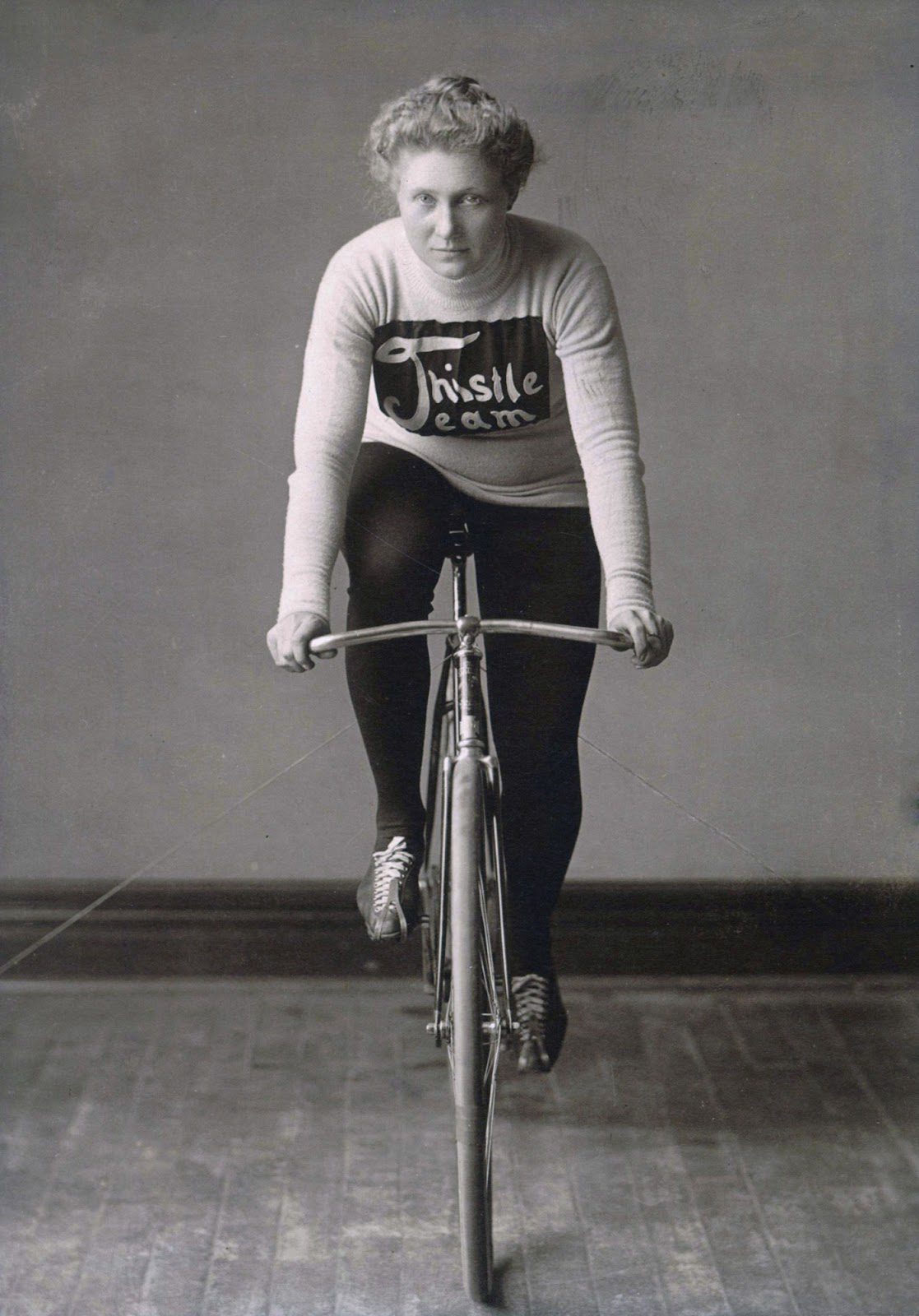
In 1895, Tillie took part in the first bicycle race, a 100-mile endurance test along the roads of Illinois between Elgin and Aurora. At the time, it was very fashionable for women to ride bicycles. However, the race only appeared. In a heavy downpour, Anderson beat the previous women’s record for the distance by 18 minutes. A few months later, in January 1896, she took part in her first six-day race in Chicago. At that time, athletes competed for several hours each night on wooden velodromes with steep inclines. During the race, Tillie lost to Dottie Farnsworth. The crowd clapped and cheered as Anderson passed Farnsworth and stormed to the finish line. It was a miracle that Tillie easily outpaced the leading competitors and set a new record for the six-hour distance of 114 miles.
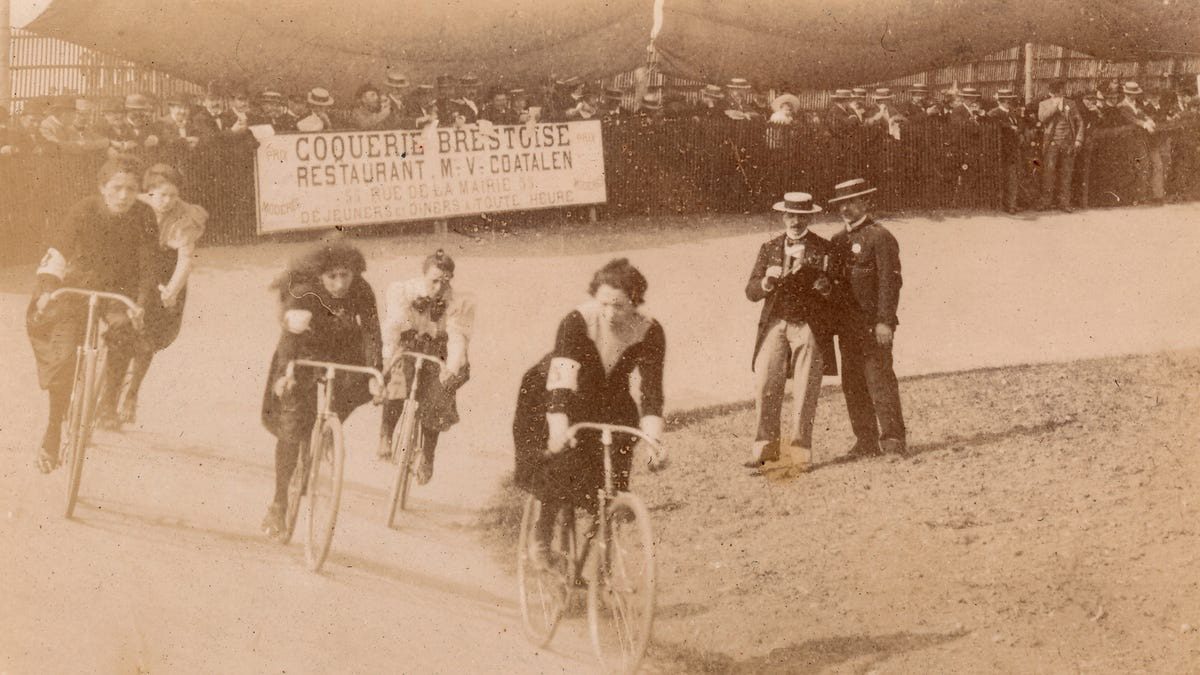
By the 1890s, women’s cycling had become one of the biggest sporting events in the country. Up to 10,000 spectators regularly attended races. Women had been riding penny-farthings with high wheels throughout the 1880s. The creation of the safe bicycle with the same-sized wheels, chain drive and improved braking made it affordable. It is important to note that women’s participation in cycling led to innovations in the sport that made it much more exciting. Women were considered the weaker sex, so organizers would them to cycle for 2–3 hours a day for a week.
The athletes competed on small wooden tracks with a 35-degree incline built inside arsenals and theaters. They ran at speeds of 22–23 miles per hour. At that time, brass bands played loudly and beat their pace.
Among the professional racers of the 1890s, Anderson was the best. During her seven-year career, she took part in 120 races and won almost all but 11. She also set records at almost every distance, from sprints to endurance. Once she ran the half-mile in 52 seconds, another time – in 100 miles in 6 hours, 52 minutes and 15 seconds. The combination of professionalism and good physical training helped her dominate. It is important to note that Tillie was one of the first to start training systematically, regularly going to training sessions and monitoring her diet to achieve good results. She steadfastly endured falls, courageously rose to her feet after failures and boldly declared her strength and abilities.
Success through help and support
Anderson was supported in everything by her coach, sports friend and future husband, Philip Sjöberg. He was the first to recognize her talent and left his career to help her. Philip planned the races, attracted profitable sponsors to cooperate with the athlete, tuned the bike and monitored the pace of training runs. Thanks to prize money and sponsorships, Tillie earned from 5 to 6 thousand dollars a year. Everyone believed that such work was not suitable for a woman, even her friends condemned her.
Tillie did not pay attention to them. She was not ashamed of herself. On the contrary, she was proud of the fact that she was able to achieve success in sports. At one time, she underwent an examination by doctors interested in studying the effects of physical exercise on the female body. Newspapers in the country published the results of the examination and an illustration of the athlete’s bare leg. When Tillie’s mother saw this, she was horrified.
The last years of her life
In the 1890s, automobiles and motorcycles appeared, which put an end to the development of cycling. In 1902, two of Anderson’s rivals died, Lizzie Glo and Dottie Farnsworth. In 1902, Tillie Anderson took part in her last race and left the sport forever. After the death of her beloved husband, she began working as a private masseuse and also helped lay bicycle paths in Chicago. Anderson died in 1965.
For decades, she was practically forgotten by the public. In 2000, thanks to her niece Alice, the athlete was inducted into the US Cycling Hall of Fame. In 2011, writer Sue Stauffacher became interested in Anderson’s story and wrote a book about her life called ‘Tillie the Terrible Swede: How One Woman, a Sewing Needle, and a Bicycle Changed History’.