

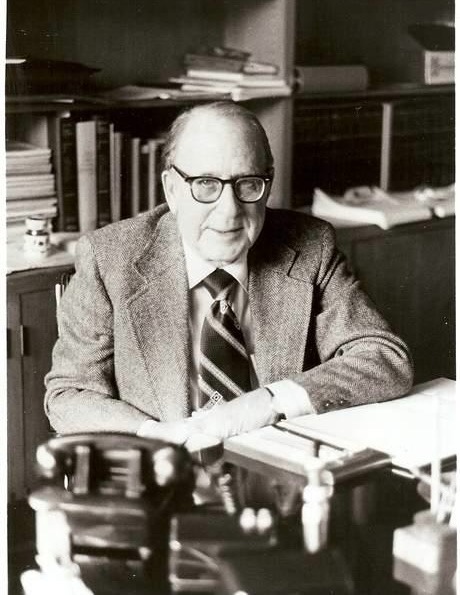
American psychiatrist, neuropsychologist, and scientist Roy Richard Grinker was one of the key figures in the development of 20th-century American psychiatry. His career spanned clinical practice, teaching, scientific research, and service in military medicine during World War II. Grinker combined academic work with practical innovations in psychiatry and psychosomatics, laying the foundation for integrating clinical medicine with the cultural and social aspects of mental health. More at chicagoka.com.
Biography
Roy Richard Grinker was born in Chicago. His father was a neuropsychiatrist. The future scientist earned a Bachelor of Science (B.S.) from the University of Chicago in 1919 and a Doctor of Medicine (M.D.) from Rush Medical College in 1921. After completing his studies, he spent a postgraduate year in Europe. Later, in 1933, Grinker visited Europe again, where he underwent psychoanalytic training under the supervision of Sigmund Freud. On the centenary of Freud’s birth in 1956, Grinker noted that Freud’s legacy left much “unfinished business,” which could only be realized when the ideas of the past were seen as starting points rather than as rigid limitations.
He began his academic career as an instructor in neurology at Northwestern University in 1925. His contributions to the development of psychiatry were recognized in 1972 with the Distinguished Service Award from the American Psychiatric Association. That same year, his colleagues and students published a book in his honor, “Modern Psychiatry and Clinical Research.”
In 1927, Grinker began teaching at the University of Chicago. This stage of his career became a launching point for further scientific work that combined neurology, psychoanalysis, and clinical psychiatry.
For 17 years, Grinker served as the editor-in-chief of “Archives of General Psychiatry,” a scientific journal of the American Medical Association. This period of his activity significantly influenced the development of American psychiatric thought, providing a platform for the publication of leading research in the field.
Military Service and “Men Under Stress”
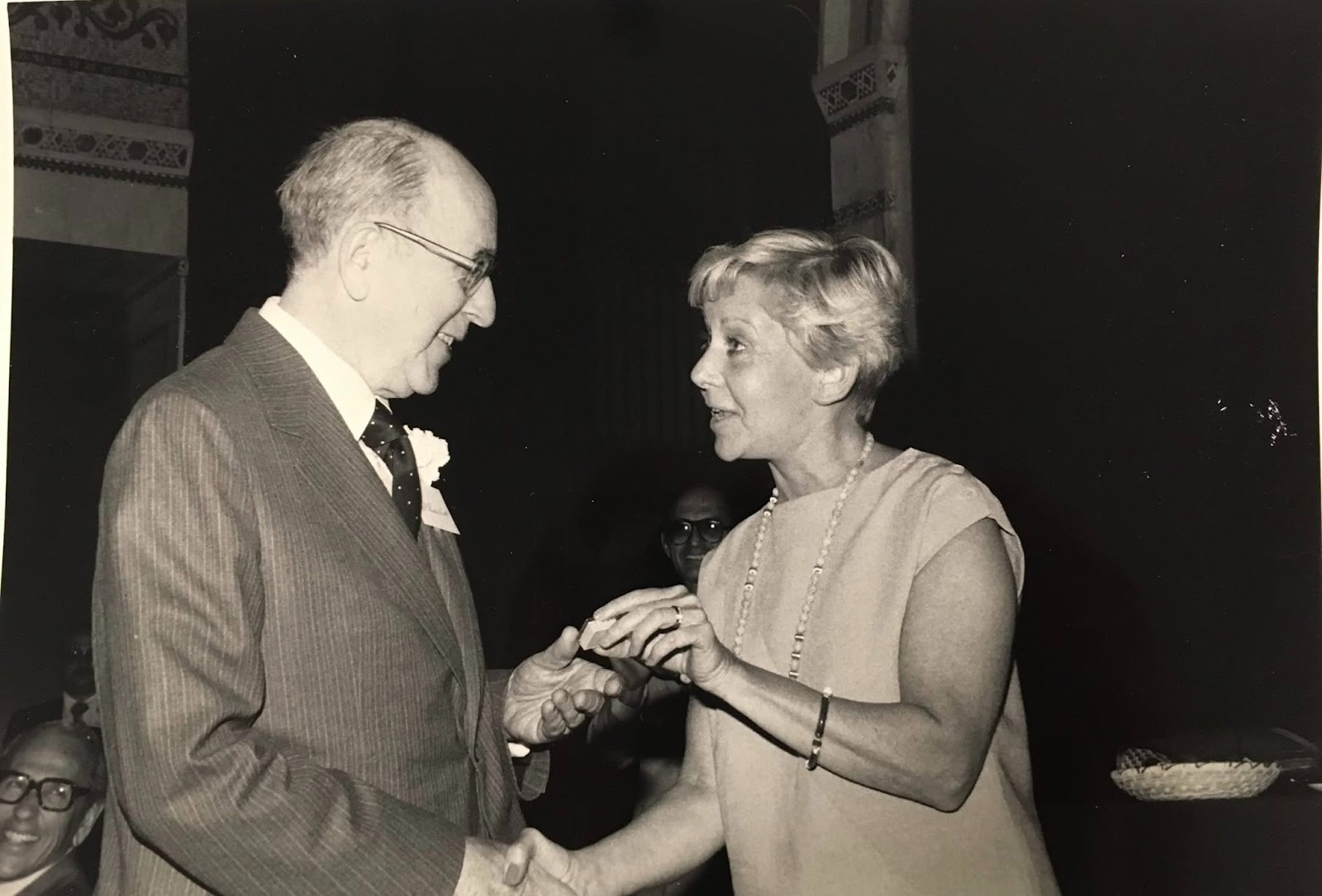
During World War II, Grinker served in the U.S. Army Medical Corps in North Africa. Along with his colleague John P. Spiegel, he wrote the book “Men Under Stress,” which was the result of observations of the psychological state of service members in combat conditions.
In 1945, they also published “War Neuroses,” which examined military neuroses and mental disorders caused by combat experience. Roy Richard Grinker actively promoted the idea of integrating psychiatry with cultural anthropology. He explored how social, economic, and historical contexts shape attitudes toward mental disorders. He emphasized the importance of training young specialists by combining clinical practice and scientific research and served as a mentor to many generations of psychiatrists in the U.S. His approaches influenced the formation of modern psychiatric education and increased the mental health care system’s sensitivity to patients’ cultural differences.
Scientific and Clinical Career
After the war ended, Grinker returned to Chicago in 1946. He became the head of the Institute for Psychosomatic and Psychiatric Research and Training at Michael Reese Hospital. He also worked as an analyst at the Chicago Institute for Psychoanalysis.
From 1951 to 1969, he held the position of clinical professor of psychiatry at the University of Illinois and also taught at Northwestern University. In 1969, he became a professor of psychiatry at the University of Chicago Medical School.
Grinker authored and co-authored a number of important scientific works, including:
- “Grinker’s Neurology” (1933);
- “Men Under Stress” (with John P. Spiegel, 1945);
- “War Neuroses” (with John P. Spiegel, 1945);
- “Psychosomatic Research” (1953);
- “Anxiety and Stress” (with H. Basowitz, H. Persky, S. J. Korchin, 1955);
- “The Phenomena of Depressions” (with J. Miller, M. Sabshin, R. Nunn, J. C. Nunnally, 1961);
- “Toward a Unified Theory of Human Behavior: An Introduction to General Systems Theory” (with Helen MacGill Hughes, 1967);
- “The Borderline Syndrome: A Behavioral Study of Ego Function” (with B. Werble & R. C. Drye, 1968).
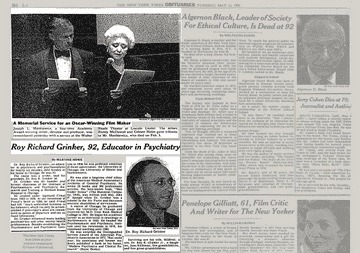
Throughout his career, Grinker published 28 books and 368 scientific articles. His publications cover a wide range of topics—from neurology to systems theories of behavior, psychosomatics, and depressive disorders.
The Views of Roy Richard Grinker
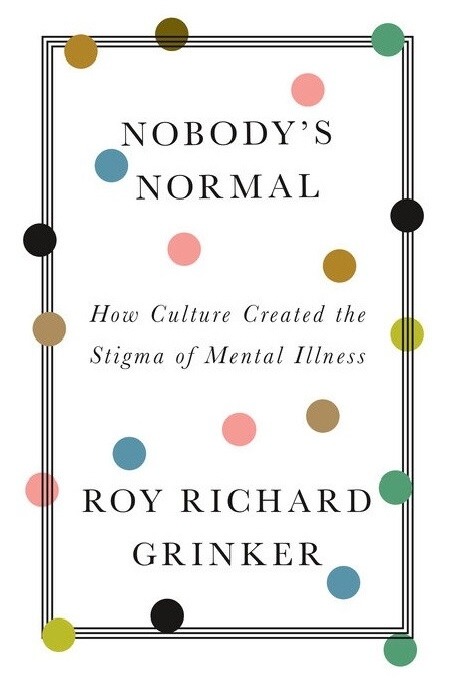
Roy Richard Grinker firmly asserted that none of us is “normal.” Not only that—he emphasized that the very concept of “normal” might be not only illusory but also undesirable. As an example, he cited a 1945 study where physician Robert Latou Dickinson and artist Abram Belskie surveyed 15,000 young white men and women in the U.S. and created sculptures of the “normal” person based on statistical averages. The results were far from attractive, but they demonstrate how obsessed people are with the idea of “normality.” And this lies at the very heart of how we talk and think about mental health. It is this obsession, he argued, that creates stigma—the main theme of his last book, “Nobody’s Normal: How Culture Created the Stigma of Mental Illness.”
Grinker explained that the stigma of mental illness is rooted in social and economic processes: capitalism, colonialism, industrialization, and the slave trade. Stigma is always accompanied by a “brand”—people society deems undesirable are labeled as “crazy,” “unworthy,” “savage,” or “unconventional,” isolated, and often discriminated against. This burden most often falls on marginalized and oppressed groups. In the U.S., people with mental disorders often end up in police custody instead of hospitals, and stigmatized diagnoses—such as schizophrenia or personality disorders—have been disproportionately applied to women and people of different races.
At the same time, Grinker showed that it is possible to view mental illness differently, without separating “psychology” and “biology,” “mind” and “body.” He gave the example of a people from Namibia. In their culture, symptoms of psychosis are not seen as a disease of the body or a fault of the mind. They attribute them to the action of external spirits, which removes the stigma of personal responsibility, yet does not conflict with treatment by medication. This approach not only reduces suffering but also lessens the burden of social stigma. Grinker posed a fundamental question: How do we combat the suffering that occurs in the human mind and is always deeply intertwined with culture? His book demonstrates that narratives of suffering often did not alleviate pain but instead dehumanized people and stripped them of their dignity.
Grinker left behind a huge legacy in American psychiatry. He was the founder and former chairman of the Institute for Psychosomatic and Psychiatric Research and Training at Michael Reese Hospital in Chicago. He influenced the development of many leading psychiatrists and mental health professionals. In 1950, he founded the Institute for Psychosomatic and Psychiatric Research, which he directed until his retirement in 1976, but he continued to teach until 1989. He was an emeritus professor at three universities: the University of Chicago, the University of Illinois, and Northwestern University.