

The name of Carl Ransom Rogers is known not only in Chicago but far beyond its limits. He worked with the key ideas of humanistic psychology and considered the personality of a person in the context of the social environment. Rogers made significant contributions to the development of psychology and psychiatry, as reported by chicagoka.com.
Childhood and youth
Carl Ransom Rogers was born in the early twentieth century in the small village of Oak Park, near Chicago. His father worked as an engineer for a construction company, while his mother was a housewife. Carl was not the only child in his family, there were four other boys and one girl. The Rogers family was strictly disciplined. Children were not allowed to take part in different events, therefore they had no friends.
In forced solitude, Carl liked to read fiction, which his parents were quite proud of. Studying the works of novelists, the boy dreamed and learned to analyze.
In 1910, the Rogers bought a farm and engaged the children to help out. Carl started working on the farm at the age of 12.
Studying at a public school made no difference in his life, he felt estranged in the company of his classmates. Dreams of a society where he could realize himself quickly faded.
The boy received excellent general education and was frequently praised by teachers. In three different educational institutions, Carl was able to completely master English.
Every summer, the teenager worked on his parents’ farm and during his free time, studied scientific methods of agriculture. Soon, the boy became interested in the lives of plants, insects and small animals.
After graduating from high school, Rogers and his brothers planned to continue farming. At the faculty of agriculture at the University of Wisconsin, communicating with teachers, the young man continued to expand his knowledge.
Eventually, he became a member of the American Christian Association. The successful student attended a conference in the capital of the People’s Republic of China, where he began to form a big life plan. Carl was heavily influenced by Asian state traditions, and his perspectives on society changed. After returning to Chicago, Rogers transferred to the history department. At the same time, he took an elective course in psychology, which captivated him for the following few decades.
Rogers found inspiration in his wife. Carl and Helen Elliott met at the University of Wisconsin. After graduating from high school, the couple got married and moved to New York.
Scientific activity
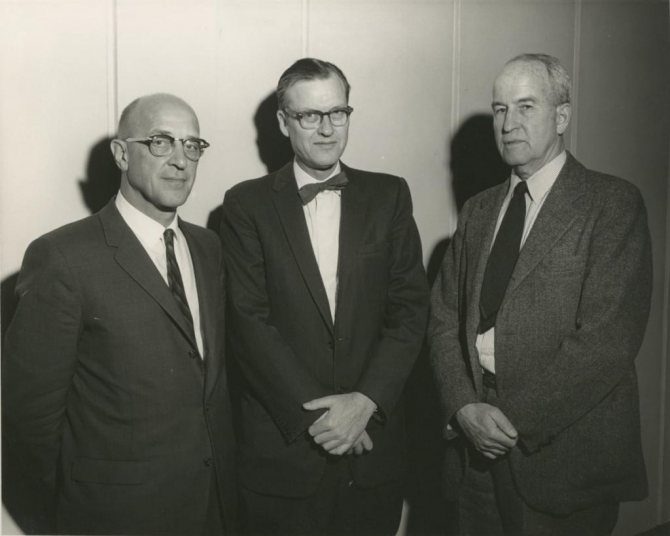
At the beginning of his career, Carl worked as a full-time psychologist in a department that counseled children from troubled families. Following his relocation to Rochester, New York, Rogers took a position as head of a counseling center, where he began writing scientific articles.
In the late 1930s, he presented to the public a work in which he described the features of clinical treatment of children with antisocial behavior that is uncommon for the social environment. The success of the publication led the young specialist to the Department of Academic Psychology. As a result, he began to assist those who had troubles.
As a professor at Columbia University, Rogers guided graduate students who shared his scientific approach. In the 1940s, the professor of clinical psychology principles published a number of narrow-topic works.
In 1945, Carl was appointed director of a counseling center in Chicago, where he also started publishing experimental material. He accepted the ideas of self-concept and the theory of motivation.
As he grew to be adept at humanistic psychology, Rogers published a series of monographs on client-centered therapy in 1950. At the core of his work was the issue of personal development, awareness and comprehension of social interaction. The concept of “congruence” has emerged in modern science.
His major achievements are considered to be the book called “Freedom to Learn” and a collection of existential articles. His phenomenological theory was well received by colleagues, who saw it as a genuine innovation in psychotherapy.
The methods proposed by Rogers have been used in dozens of different countries. Many successful and effective programs have been built based on the publications of the Chicago native.
Group psychotherapy is a widespread phenomenon in modern science, which Rogers used in his work in 1950. However, the experimental study of the collective consciousness of schizophrenics was initially not accepted in public and cultural circles.
Last years of life
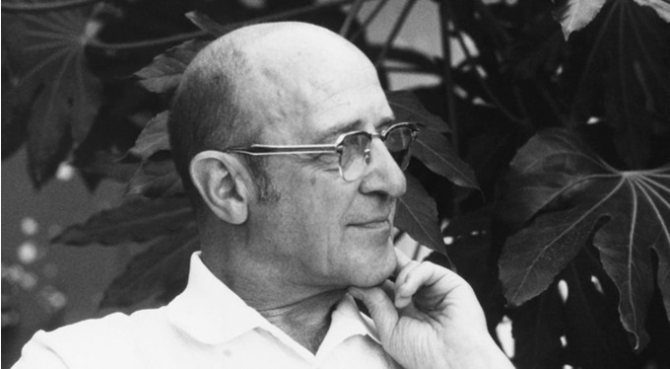
Carl Rogers received a number of awards and honors in recognition of his significant contribution to the development of psychology.
In 1980, Carl traveled the world, delivering informative lectures in Asia and Europe. Doctors who learned from his practical experience bought books with photos to help their patients recover from psychological trauma.
In 1987, Carl Rogers passed away. The news of his death was devastating for many psychological communities, upsetting hundreds of people.