

Jane Byrne was a politician who became the first woman to be elected as a mayor of Chicago, the city’s 50th. Working in politics, she made significant contributions to the development of the metropolis and demonstrated to everyone that women deserve more. Find out more at chicagoka.com.
Political career

Jane was born on May 24, 1933, in Chicago. After graduating from high school, the girl attended Saint Mary-of-the-Woods College, then transferred to Barat College of the Sacred Heart, where she received a bachelor’s degree in chemistry and biology in 1955.
Jane married William Byrne in 1956, and their daughter was born a year later. In 1959, the Byrne family experienced a great loss, prompting Jane to enter politics. Then, in an attempt to land a plane in thick fog, her husband crashed. She became a widow at the age of 26. To cope with the pain of loss, the woman took part in John F. Kennedy’s presidential campaign, attracting the attention of former Chicago Mayor Richard J. Daley. She became his favorite, and during the Daley administration, she held a variety of posts and advanced in city government.
In 1964, Byrne was assigned to the city’s Head Start program. A year later, she was promoted to the Chicago Committee on Urban Opportunity. Later, Byrne became chairman of the city’s consumer affairs department. In 1975, despite objections from Democratic leaders, Daley appointed her co-chair of the Cook County Democratic Central Committee. At the end of 1976, Richard Daley passed away, and Jane Byrne was removed from office.
Tenure as mayor
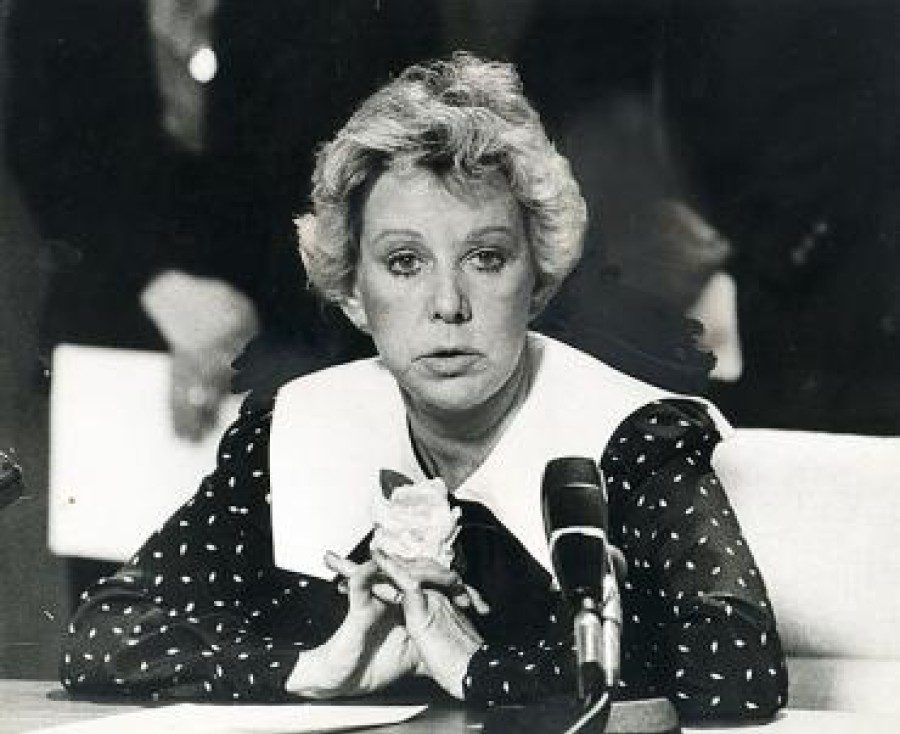
In 1977, Byrne challenged Michael Anthony Bilandic and launched her own campaign for mayor of Chicago. Many people did not take her candidacy seriously. In April 1979, the woman won the election. 82% of the votes were cast for her.
Byrne served as mayor for just one term. In four years, she organized Chicago’s first Gay Pride Parade, which was officially recognized by the city. She actively promoted art in Chicago, bringing the film industry to the city and organizing various festivals. When Chicago was closed to Hollywood, Byrne invited film crews, making the city a famous setting for many films, the first of which was “The Blues Brothers.”
Furthermore, the first female mayor invested a lot of money in modernizing the city center and river embankment, as well as extending and upgrading the city’s ground transportation line to O’Hare airport.
She cooperated with notable aldermen such as Edward Vrdolyak and Edward Burke. During her tenure as mayor, the city experienced two strikes by firefighters and teachers.
In 1981, Byrne relocated to the Cabrini-Green public housing complex in order to raise public awareness about the violence. Her move sparked countless debates: some supported it, while others accused her of performing a publicity stunt.
Jane was a fighter by nature, an “Iron Lady.” In the face of a poor economy, growing poverty, and rising violent crime rates, Byrne issued an order effectively prohibiting the carrying of weapons in the city.
In the 1983 race, the son of former Mayor Richard M. Daley and Harold Washington ran against Byrne. Washington won, becoming Chicago’s first black mayor.
In 1987, Byrne campaigned for mayor again but was defeated once again. In 1991, following another failed attempt to become mayor, Byrne practically retired from politics.
In 2013, Jane Byrne experienced a stroke, which had a negative impact on her health.
In November 2014, the woman died as a result of complications caused by the stroke. Jane Byrne made a significant contribution to the development of Chicago and proudly established herself as mayor, showing everyone how much she loved her hometown.