

Lupe Fiasco stands as one of the most influential figures in conscious hip-hop. He is an artist who seamlessly weaves social commentary, philosophical depth, and intricate poetic language into his music. His life story is a study in contrasts: a journey between violence and education, the rough streets and the quiet of a library, and the discipline of martial arts versus the beauty of literature. These contradictions forged a unique style that pushed the boundaries of traditional hip-hop. Read more on chicagoka.
Early Life and Chicago Roots
Lupe Fiasco was born Wasalu Muhammad Jaco on February 16, 1982, in Chicago, Illinois. He grew up in a large household as one of nine children. His mother, Shirley Jaco, was a gourmet chef, while his father, Gregory Jaco, was an engineer, martial arts grandmaster, and musician with deep ties to the Black Panther Party.
Fiasco spent his childhood in the Madison Terrace housing project on Chicago’s West Side – an area where crime and poverty were daily realities. However, his home was a sanctuary of learning. Books, encyclopedias, National Geographic magazines, and PBS documentaries offered a stark alternative to the lure of the streets. The rapper has often credited his obsession with reading and his parents’ encouragement as the key factors that shaped his worldview.
Despite his parents’ divorce, his father remained a pivotal figure, exposing the children to diverse cultures, music, and disciplines while teaching them self-defense. Lupe began training in martial arts at the age of three, a practice that evolved into a lifelong philosophy. By the sixth grade, he moved to live with his father in Harvey, Illinois, further expanding his horizons beyond the city limits.
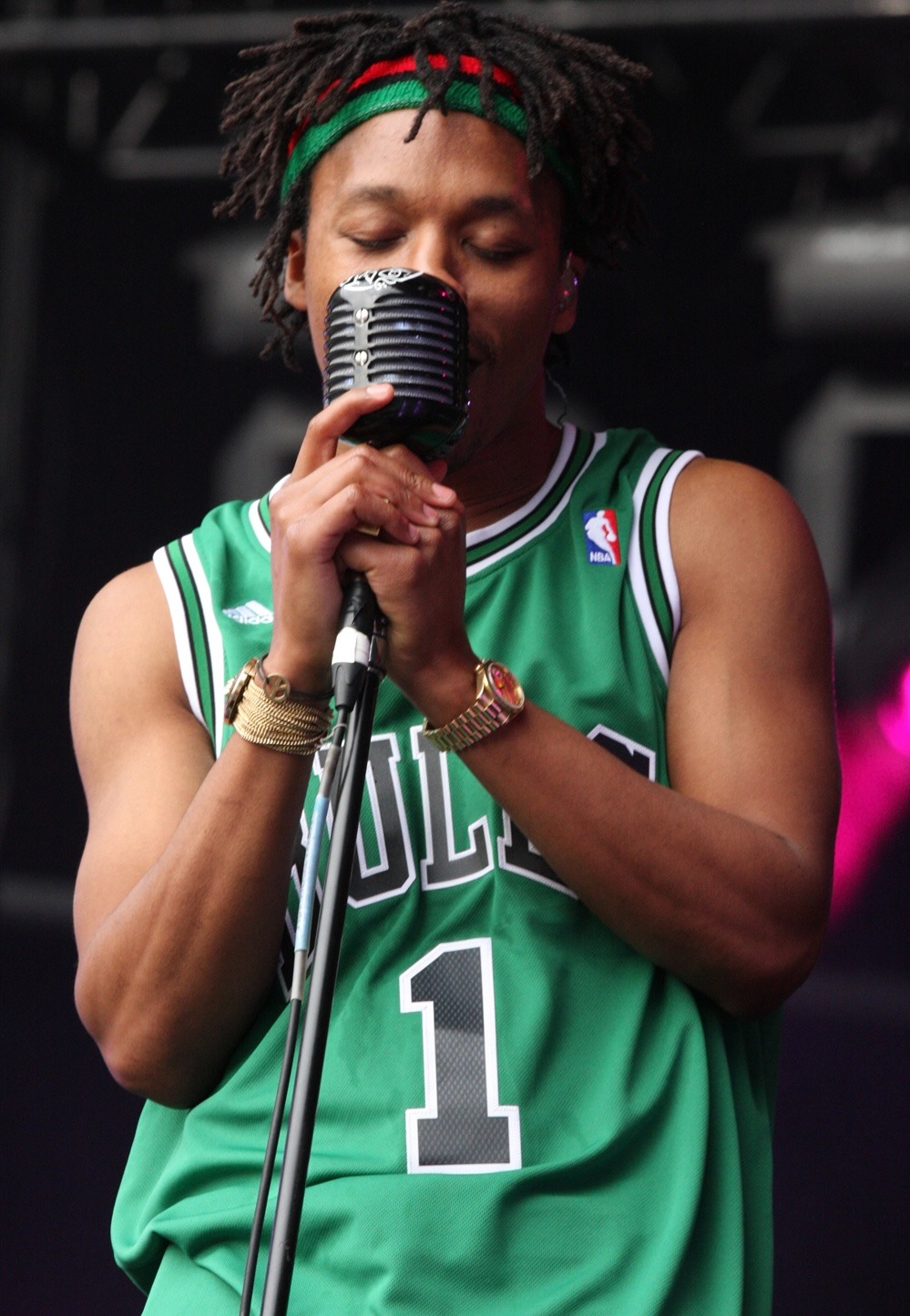
Finding His Voice
Interestingly, Lupe Fiasco didn’t always love hip-hop. Initially, he found the genre vulgar and gravitated toward jazz, idolizing clarinetist Benny Goodman. After struggling to master various musical instruments, he turned to poetry. This eventually led him to rap, which he viewed as a form of literary expression rather than just a musical genre.
A major turning point came when he heard Nas’s album “It Was Written.” By eighth grade, Fiasco was rapping, and in high school, he began creating music with Bishop G. His early performances weren’t always embraced by the local hip-hop scene, but this friction only sharpened his desire for independence and his unikue lyrical approach.

The Professional Climb
In the early 2000s, Lupe Fiasco joined the group “Da Pak,” which signed with Epic Records. However, the experience of being pushed toward commercial gangsta rap caused an internal conflict. He made a conscious decision to walk away from that path, choosing instead to focus on social issues and the moral responsibility of an artist.
After a brief stint with Arista Records, he crossed paths with Jay-Z, who helped him secure a deal with Atlantic Records. During this time, Fiasco began building a massive underground buzz through his “Fahrenheit 1/15” mixtape series. His remix of “Conflict Diamonds” even caught the attention of Kanye West, leading to a high-profile feature on West’s track “Touch the Sky.”
His debut album, “Lupe Fiasco’s Food & Liquor,” released in 2006, became a landmark for the genre. The record earned rave reviews, multiple Grammy nominations, and established Fiasco as hip-hop’s resident intellectual rapper. The single “Kick, Push” became a cult classic for its focus on skateboarding culture – a rarity in hip-hop at the time – while “Daydreamin’” won him his first Grammy Award.
His sophomore effort, “The Cool,” continued the conceptual narrative of his debut, blending personal tragedy with social allegory. The New York Times hailed it as one of the best hip-hop albums of the year, cementing his place at the top of the game.

Artistic Evolution and Experiments
The following years were marked by public disputes with his label, genre-bending experiments, and a fierce commitment to activism. While the album “Lasers” was a commercial success, it received mixed reviews from critics who felt it was too pop-oriented. Undeterred, Fiasco returned to his conceptual roots with ambitious works like “Food & Liquor II,” “Tetsuo & Youth,” “Drogas Wave,” and “Drill Music in Zion.”
In 2024, he released “Samurai,” a project inspired by the legacy of Amy Winehouse. The album showcased his ability to engage in profound cross-genre dialogues, proving that his creative well is nowhere near dry.
A defining trait of Lupe Fiasco’s career is his unwavering intellectual independence. He has never been afraid to publicly criticize the commercialization of hip-hop, the predatory nature of major labels, or the dumbing down of social narratives in popular music. His lyrics are often dense with references to Islamic philosophy, political theory, African American history, and global conflicts, making him a truly unique voice in 21st-century music.
Beyond the recording booth, Lupe Fiasco is deeply involved in academia and culture. He served as a visiting professor at MIT, teaching a course titled “Rap Theory and Practice.” By 2025, he joined the Peabody Institute at Johns Hopkins University as a visiting scholar. His influence also extends to fashion, visual arts, and documentary filmmaking. Additionally, his charitable work focuses on critical issues like clean water access and providing support for victims of humanitarian disasters.
Lupe Fiasco is the perfect example of an artist who uses hip-hop as a tool for thinking, criticism, and education. His journey from the West Side of Chicago to prestigious university lecture halls proves how culture can transform lives and reshape the public discourse. There is a great posibility that his best work is still ahead of him.