

As in other cities, Chicago had its own feminist movements that advocated equality between the sexes and opposed the persistence of discrimination based on sex. Read about feminism in Chicago on chicagoka.com.
The first feminist organization and movement
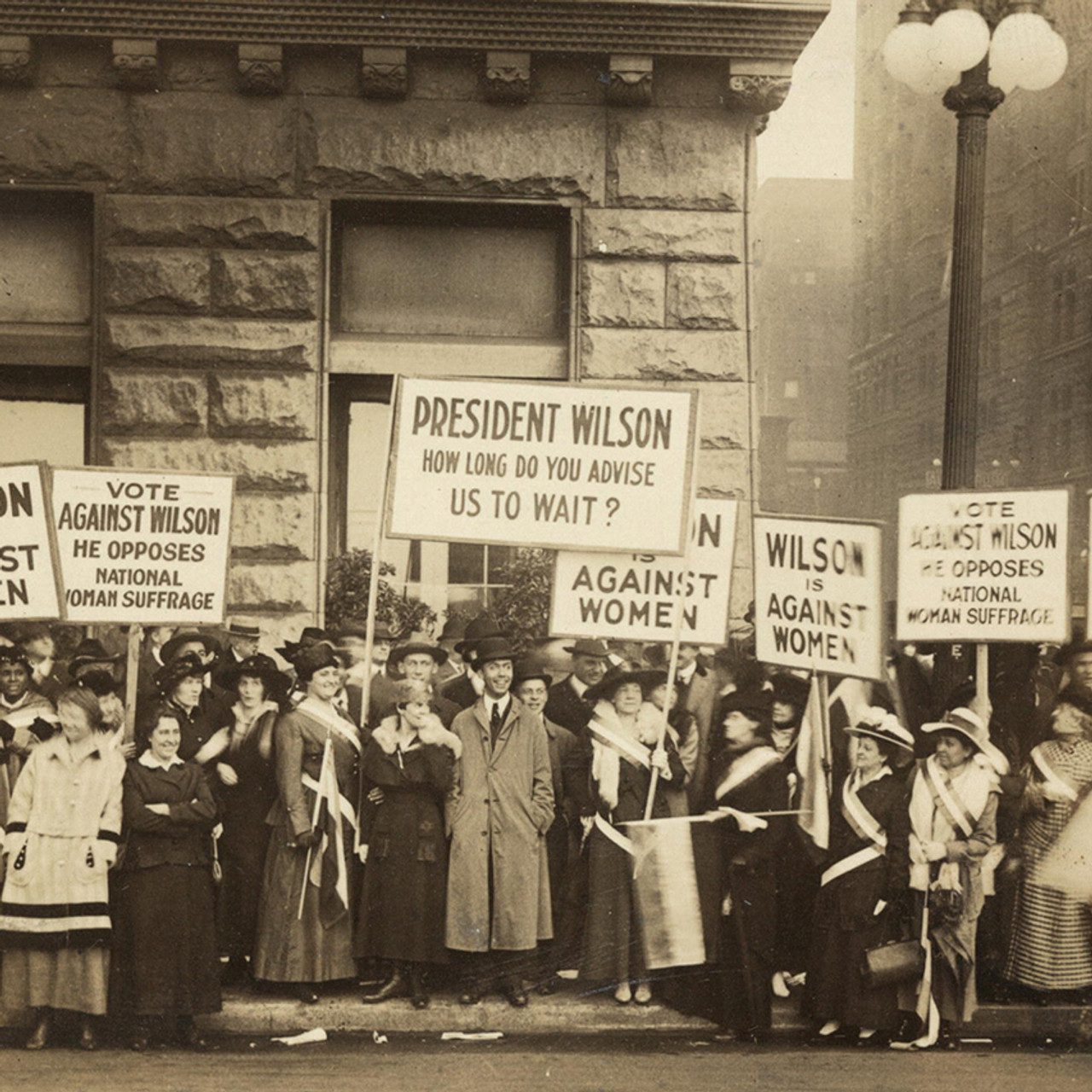
In 1912, the first feminist organization was formed in the city, consisting of women suffragists of Cook County. Charlotte Rhodus became its president. The main duty of this organization was to ensure full political equality for women.
The feminist movement for birth control was another important element in the struggle for women’s rights. Chicago feminists argued that the lack of legal, accessible information and birth control discriminated women.
The Chicago Women’s Trade Union League demanded that the government provide information to women about birth control and disseminated the information through its Committee on Birth Control. This committee was chaired by Rachelle Yarros. In 1915, she, along with the Chicago Women’s Trade Union League, convinced the Chicago Women’s Club to organize a committee on birth control.
In 1920, the Parents’ Committee actively worked to repeal then-proposed laws that prohibited licensed physicians from distributing birth control information.
In 1923, a committee in Chicago attempted to open a clinic where women could receive this information. The city’s health department refused to issue the necessary licenses. Instead, it became involved in promoting birth control centers that operated in doctors’ offices. The committee also founded the Illinois Birth Control League, which opened Chicago’s first birth control clinic.
Constant struggle for women’s rights
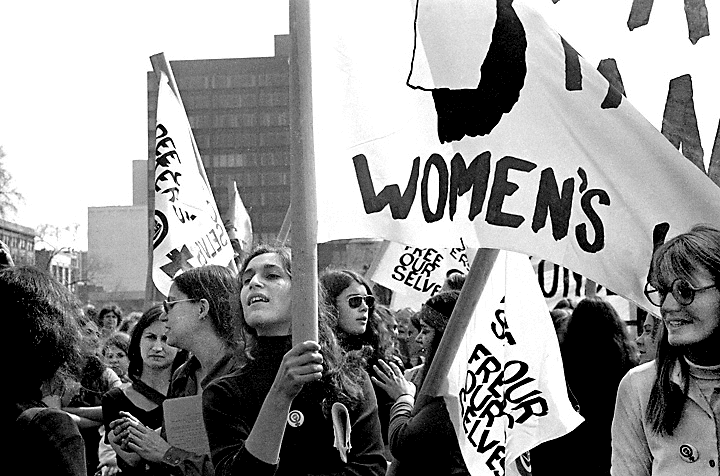
In 1960, the feminist movement began again, seeking to use laws to overcome institutionalized political and economic inequality. In 1963, Chicago politician Esther Saperstein submitted a bill to the legislature to create a Commission on the Status of Women.
Feminists gathered in Chicago to organize the National Organization for Women in 1967. It wanted the government to pass the Amendment for the rights of mothers in employment, receiving social security assistance and creating positive conditions for teaching women to control their reproductive opportunities.
During this period, Chicago women also organized the National Women’s Political Caucus and the Women’s Equity Action League to help women press charges of discrimination and to fight racism and sexism.
In 1960, a new feminist movement called Women’s Liberation emerged, which argued that women were suffering from political oppression in a male-dominated society.
In 1965, the women of the University of Chicago organized one of the first groups in the city to deal with this issue. Chicago feminists founded the Chicago Women’s Liberation Union to raise awareness among African-American women about the oppression of their rights. Representatives of this union claimed that it was necessary to radically change the current economic and socio-political structures to solve this issue.
Feminist movements in the 1960s focused on achieving reproductive and sexual freedom for women. Feminists demanded affordable childcare, birth control and abortion on demand, more attention to women’s health and the creation of crisis centers to combat violence.
Their efforts resulted in the passage of the Municipal Sexual Assault Treatment Centers Act. This law led to the opening of centers in several city hospitals. Feminists also bravely went against the law, creating an underground organization called The Jane. There, abortions were carried out when they were still prohibited in Illinois.
Economic equality
Economic equality has also become a goal of feminist movements. Many other movements were more likely to advocate for the protection of women’s work and the new organizations emphasized gender equality in the workplace.
The Coalition of Labor Union Women was founded in Chicago in 1974. Its main goal was to give women access to leadership positions, which did not exist in the structure of trade unions dominated by men. They were also supposed to help women overcome discriminatory insurance rates and deductions from pension benefits, as well as provide maternity leave.
The Women Employed organization fought against discrimination in the employment of non-union women. The Feminist Writers’ Guild was organized in 1980 and sought similar equality for women writers.
New feminist associations also appeared, some of which were lesbian or closed to men.
Unions and associations that were created at the end of the 20th century, became a manifestation of the desire of Chicago feminists to free women from male domination in a patriarchal society. Women had to distance themselves from the control of men in all spheres of their personal and social life.