

Café · Chicago · ⭐ 9.3/10 · 1104 reviews · updated: 2026-08-10 15:36:39
Address: 346 N Clark St Unit 4709, Chicago, IL 60654, United States
Almost every café in this city can tell you which roaster it buys from. This one can tell you which of its own family members built the roastery, and in which decade. Caffè Umbria is the Chicago outpost of a coffee house whose lineage runs back to a roasting works in Perugia built in the years right after the Second World War, passed from grandfather to father to son, carried across the Atlantic and rebuilt on the American side. The River North room is the family’s first address outside the Pacific Northwest, and it is the closest thing downtown Chicago has to a proper Italian café-bar.
Highlights
- Three generations of roasters: the family roastery was built in Perugia in the 1940s by Ornello Bizzarri, passed to his son Umberto, and now run by third-generation master roaster Emanuele Bizzarri.
- An Italian house style, not an American one — blends built for depth and crema rather than the bright, acidic register that dominates specialty coffee.
- The company’s first café outside the Pacific Northwest, opened in River North in 2015 and set in a historic downtown building.
- Alternative brewing done the Italian way: alongside espresso there is a moka pot service, plus pour-over and cold brew.
- The company now roasts in Chicago too — a second local site combines a café with a full roastery and coffee lab.
- Light Italian food from local artisan suppliers: panini, pastries and gelato, with whole beans sold by the bag and in bulk.
What’s in the cup
The house position here is unfashionable and consciously so. Most of the specialty movement of the last twenty years has pushed roasts lighter, chasing acidity, florals and the character of a single farm. The Italian tradition this family comes from does the opposite: it blends across origins, roasts slowly and more deeply, and treats consistency and body as the achievement. Their signature blends run from lighter to dark and carry names that read like a map of Umbria, with the family surname itself on one of them. What they share is a build aimed at crema, chocolate and a long finish — coffee designed to be drunk with milk in the morning and neat after lunch, which is exactly what Italians do with it.
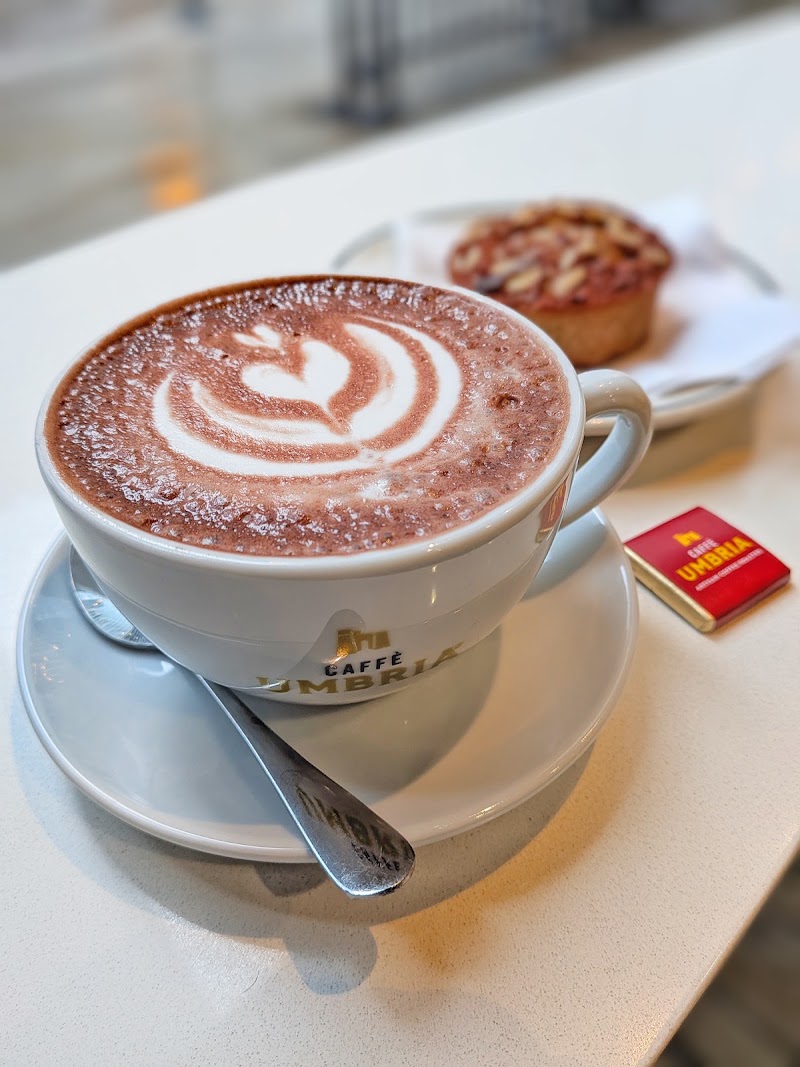
If you want to understand the house, order an espresso first and a cappuccino second. The espresso is the reference point: short, dense, sweet rather than sour, made to be drunk in a few mouthfuls at the bar. The cappuccino is where the Italian discipline shows most clearly — properly proportioned rather than a latte in a smaller cup, and one of the drinks this café is most often praised for. If you take milk, take it in the morning; the Italian habit of leaving milky coffee behind once the day is properly underway is not a rule anyone here will enforce, but the menu is built around that rhythm.
The brewing bench is broader than the tradition suggests. Alongside the espresso machine there is a moka pot service — the stovetop pot every Italian household owns, done properly and to order, which almost no American café offers — plus pour-over and cold brew for anyone who wants the lighter, longer version of the same beans. The retail shelf carries the full blend range in bags and in bulk, and the point of a room like this is partly that you can taste a blend and then take it home, which is how the family business worked in Perugia in the first place.
Who’s behind it
The story begins with Ornello Bizzarri, who built a roastery in Perugia in the years immediately after the war, prompted by an uncle already in the trade. It passed to his son Umberto, and the family later moved to Seattle, where the third generation — Emanuele Bizzarri — grew up around the machinery and eventually took the title of master roaster. He founded the current company in 2002 as a wholesale roasting business and opened its flagship café three years later; the operation now roasts on the scale of a million pounds a year and supplies cafés and restaurants across the continent.
What matters for a visitor is what that lineage does to the taste. This is not a company that discovered coffee as a lifestyle; it is a family that has been blending and roasting continuously for three generations, on two continents, through the entire arc from postwar Italian espresso culture to the modern American specialty scene — and has declined to abandon the first for the second. The Chicago café was deliberately placed in a downtown business district rather than a hip neighborhood, because the model being imported is the Italian city-center bar: fast, formal, excellent, and used by the same people every morning.
What it’s for
A proper espresso, standing or sitting, in five minutes. This is the room’s core purpose and its clearest advantage. The Italian bar model is built for the short visit — you order, you drink, you go — and downtown Chicago has very few places that do it to this standard.
A business meeting near the Loop. The location is squarely in the office and design district, the room is calm and grown-up rather than youth-coded, and the table turnover means you can usually find a seat. This is a much better meeting room than a brunch café, and it is used that way heavily on weekdays.
Laptop work — fine for an hour or two, not for a day. There is Wi-Fi and there is seating, and in the quieter stretches nobody will bother you. But be realistic about the format: this is a European-style bar rather than a co-working room, power outlets are limited, the lunch rush is real, and the café closes well before evening. Treat it as a place to answer email over a cappuccino, not as an office.
Buying beans. Retail is central to the concept rather than an afterthought — the full blend range is sold in bags and in bulk, which makes this the most practical stop downtown if you want Italian-style coffee for a home machine or a moka pot.
A quick lunch. Panini and light Italian plates make this a genuine lunch option in a district where lunch usually means a queue at a fast-casual counter.
A stop on a walk through the center. The location works naturally into a route between the river, the design district and the Loop, and the gelato counter makes it a reasonable warm-weather destination in its own right.
The space
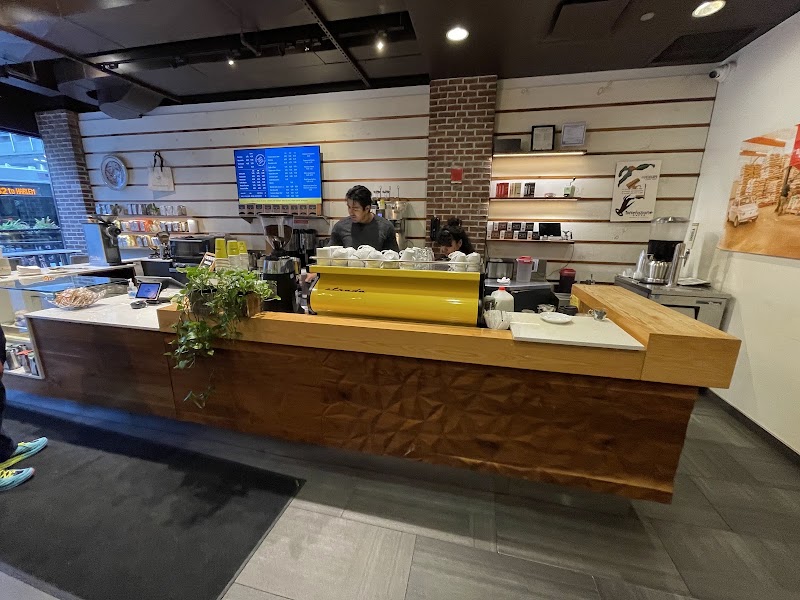
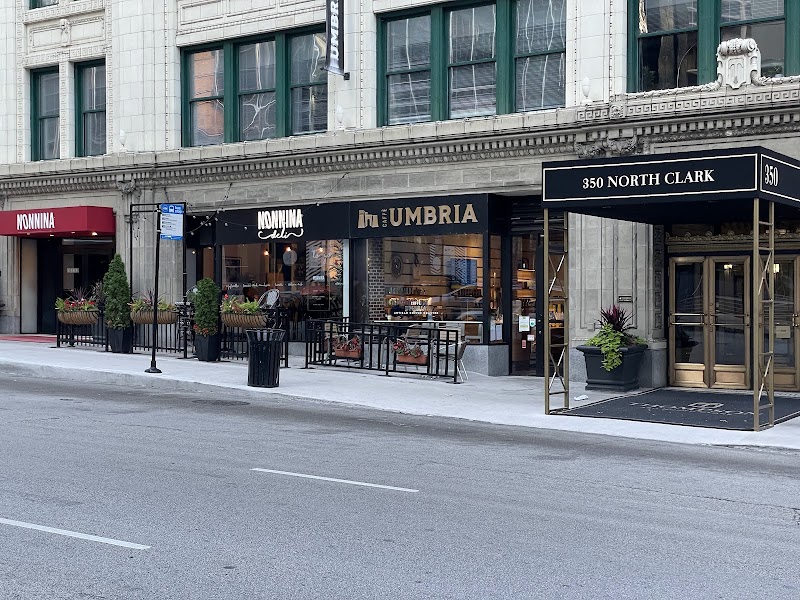
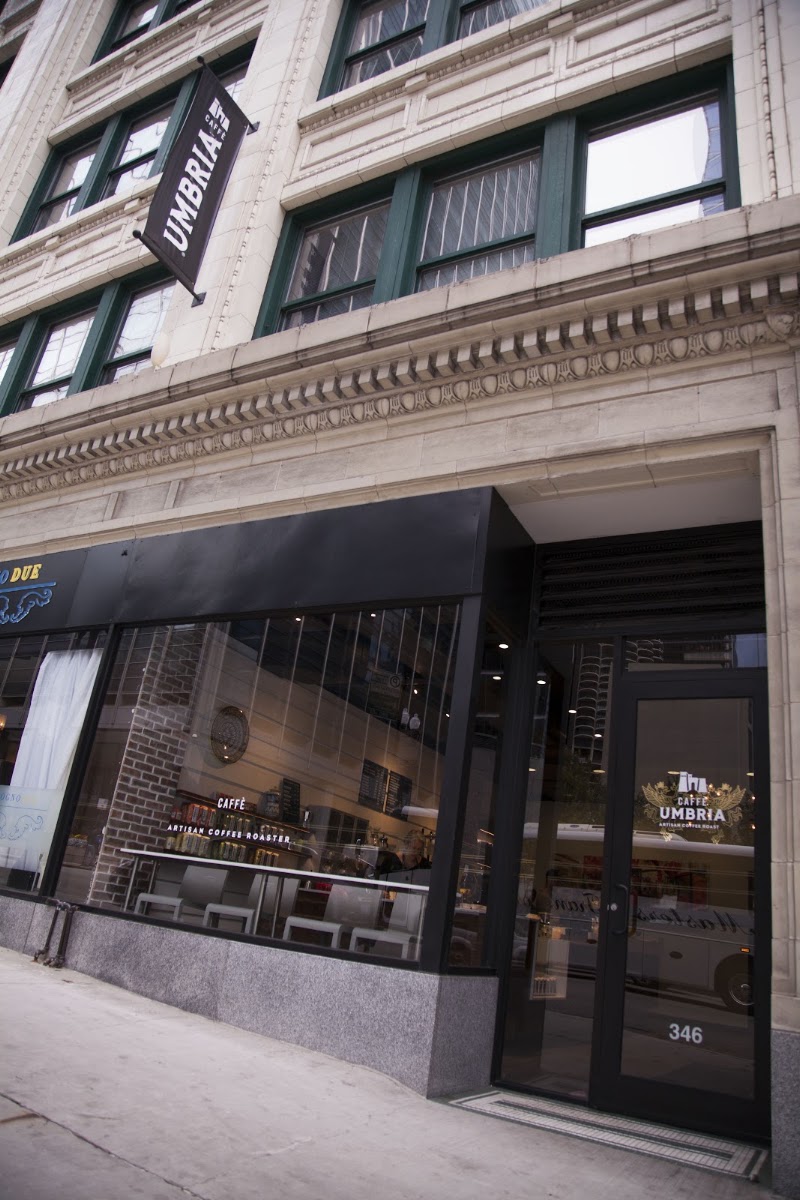
The café sits on the ground floor of a historic downtown building in River North, and the design brief was explicitly to import the European urban café rather than to invent something local: warm materials, tile, a proper bar as the center of gravity, and a room organized around the espresso machine rather than around seating. Compared with the family’s Seattle flagship — which mixes exposed brick with Italian tile and ceramic — the Chicago room is more compact and more urban, which suits the neighborhood.
The clientele shapes the atmosphere as much as the furniture does. On a weekday morning this is an office-district bar: quick orders, regulars, a certain amount of standing, conversation at a moderate register. It never becomes a lounge and never tries to. Seating exists and is comfortable, but the room’s logic is that the bar is the main event and the tables are for people who have a reason to linger.
The honest limitations follow from that. This is not a large room, and at the lunch peak it is busy and brisk. It is also, unavoidably, a downtown café — there is no garden, no view, and no neighborhood texture of the kind you get in Wicker Park. What it offers instead is precision and calm, which downtown is much shorter of.
Beyond coffee
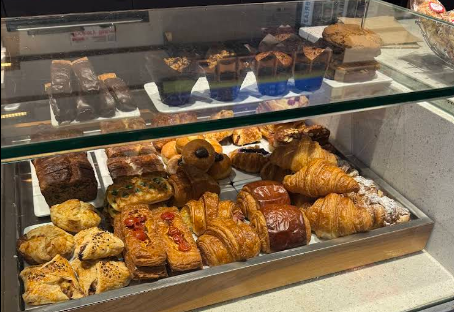
Yes, there is real food, and it follows the same logic as the coffee: Italian, light, and bought from local artisan producers rather than cooked from scratch on site. Panini and pastries carry the day, and the gelato counter is a genuine draw in warm weather. Nobody is pretending this is a restaurant kitchen — the model is the Italian bar, where the food exists to accompany the coffee and to get an office worker through until dinner.
The other half of the counter is retail. Whole beans in the full range of house blends are sold by the bag and in bulk, along with the equipment culture that goes with them. In a city where most cafés sell one house bag as a souvenir, this is a shop as much as a bar — which is the older and, in Italy, the more usual arrangement.
When to come
The rhythm here is the office district’s rhythm, and it is worth planning around. Weekday mornings are the café at its most characteristic: fast, full of regulars, and the closest thing in Chicago to standing at a bar in an Italian city. The middle of the day brings the lunch trade and the room gets brisk. Late afternoon on a weekday is the calmest and best window for a conversation or a slow second coffee.
Weekends are a different and gentler proposition — the office population is gone, the pace drops, and the visitors are people walking the river and the center rather than commuters. The café keeps a shorter weekend schedule than a neighborhood coffee shop would, and it does not trade in the evening at all, so this is a daytime address in every sense. Current opening times are in the schedule block on this page.
Getting there
You are in River North, on the near-north side of the river and a short walk from both the Merchandise Mart and the Loop. Transit could hardly be better: the Merchandise Mart station on the Brown and Purple lines is a few minutes away, the Clark/Lake hub with most of the “L” system is just across the river, and Union Station is a manageable walk west. Marina City’s towers and the Riverwalk are close enough to build into the same outing, and the whole design and gallery district sits immediately around you. Driving into River North is possible but rarely worth it — garages are plentiful and expensive, and everything here is faster on foot.
Good to know
Three things worth knowing. First, order an espresso before you order anything else; the house style is Italian rather than Nordic, and the espresso is the statement the whole business is built on. Second, ask about the moka pot — a stovetop brew made to order is close to unique among American cafés and is the most interesting non-espresso thing on the menu. Third, buy beans while you are here: the full blend range is on the shelf in bags and in bulk, and the shop half of the business is not an afterthought.
One expectation to set. If your idea of a great café is a rotating single-origin filter bar with tasting notes on a chalkboard, this is not that, deliberately. The family’s argument — three generations old and still being made — is that a blend, roasted deeply and consistently, is the harder and more useful craft. Chicago has plenty of rooms making the other case, several of them on this list. This is the one making the Italian one, and it makes it well.
Questions and answers
Do they roast their own coffee?
Yes. The company is a roaster first and a café operator second, roasting on a large scale for wholesale as well as its own shops — and it now roasts in Chicago too, at a second local site that combines a café with a full roastery and coffee lab.
What makes the coffee different from most specialty cafés?
The style. The house tradition is Italian — blends across origins, slower and deeper roasting, and a taste built around crema, chocolate and body rather than the bright acidity and single-farm character that dominate modern specialty coffee.
Who is the family behind it?
The Bizzarri family. The roastery was founded in Perugia in the 1940s by Ornello Bizzarri, passed to his son Umberto, and is now led by third-generation master roaster Emanuele Bizzarri, who founded the current company in 2002.
Is there filter coffee, or only espresso?
Both, plus something rarer: alongside espresso drinks there is a moka pot service, the Italian stovetop method made to order, as well as pour-over and cold brew.
Can I work here with a laptop?
For an hour or two, comfortably. For a full working day, no — the format is a European café-bar rather than a co-working space, outlets are limited, the lunch period is busy, and the café closes well before evening.
Is there food?
Light Italian fare: panini, pastries and gelato, sourced from local artisan producers rather than cooked from scratch on site. Enough for lunch, not a restaurant menu.
Can I buy beans to take home?
Yes, and it is a real part of the business — the full range of house blends is sold in bags and in bulk.
Is it open in the evening?
No. It runs a daytime schedule tied to the business district, with a shorter day at weekends, and does not trade in the evening.
How do I get there on the “L”?
The Merchandise Mart station on the Brown and Purple lines is a few minutes’ walk, and the Clark/Lake interchange is just across the river, which puts almost the whole system within one connection.
Opening hours
| Day | Hours |
|---|---|
| Monday | 07:00–17:00 |
| Tuesday | 07:00–17:00 |
| Wednesday | 07:00–17:00 |
| Thursday | 07:00–17:00 |
| Friday | 07:00–17:00 |
| Saturday | 08:00–16:00 |
| Sunday | 08:00–16:00 |
Photos
Visitor reviews
Reviews last updated: 2026-08-10 15:36:39
Data is refreshed monthly. Sources: chicagoka.com and editorial picks based on reviews.
Чудова кава! Медово-вівсяний лате – мій улюблений. ОДНА річ, яку їм ПОТРІБНО змінити, це дизайн кришок для їхніх холодних напоїв. Кожен ковток проливається по підборіддю. У них дуже дивні кришки.
Superb coffee. Had the oat milk latte and coffee was extremely smooth and mild. Wonderful!
Завітав на вихідні на День Святого Патріка, і біля дверей була черга, повна людей. Навіть попри це, черга швидко просувалася. Я був приємно здивований тим, яка смачна була кава. Навіть попри те, що в магазині було багато…
Лате тут просто неймовірні!! Мені також дуже подобаються їхні ароматизовані сиропи. У вестибюлі будівлі є кілька столиків, але в іншому місця небагато. Подобається п'ятнична пропозиція — безкоштовний напій при покупці па…
Кафе «Умбрія» було саме тим, що мені було потрібно того ранку. Було холодно, волого, і я хотів чогось гарячого, простого. Невеликий та затишний заклад. Такий, де ти сповільнюєшся, не намагаючись. Персонал також був щиро…