

In the second half of the 19th century, Chicago was rapidly transforming from a small town into an industrial giant. Despite the intense urbanization, the smoke from factory chimneys, and the clatter of rail lines, the heart of this city always had room for love, romance, and lavish weddings. Also, learn about Chicago’s schools of fashion and style. More on chicagoka.
Who Got to Celebrate?
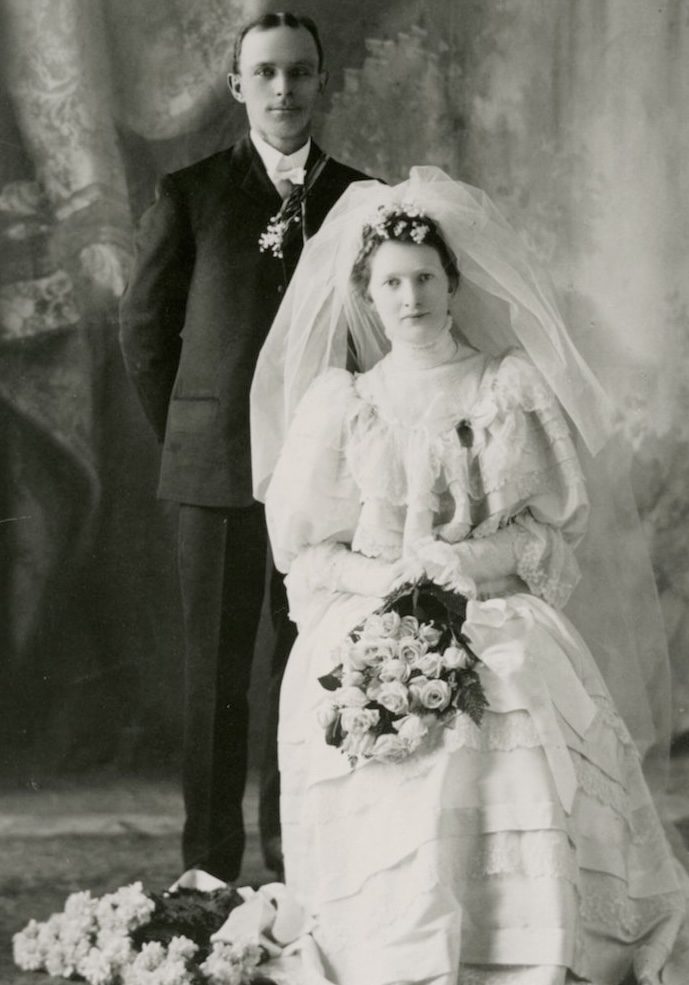
In 19th-century Chicago, weddings were not merely a celebration of love—they served as a clear marker of social status, a symbol of belonging to a specific societal stratum, and a demonstration of wealth. The invitation to a wedding was a matter of extreme importance. The choice of guests signaled who the family maintained ties with and who was deemed “worthy” of their presence at the ceremony. Often, people who were not included on the guest list considered it a personal insult. Such a “social slight” could lead to severed relationships between families, as a wedding invitation was a public acknowledgment of a person’s social standing. There were instances where local newspapers, particularly the English-language Chicago Tribune and German-language publications, printed guest lists, the names of the newlyweds, and descriptions of wedding gifts. This only heightened the social pressure on families.
In wealthier districts like Prairie Avenue, weddings were extravagant, featuring the finest decorations, silk gowns, exclusive orchestras, and premium beverages. Such events often took place in mansions or expensive hotels. Attending such a wedding not only reinforced one’s status but also opened opportunities for profitable marriages or business alliances. The middle class, actively growing amid industrialization, tried to emulate the elite. Families often made financial sacrifices to ensure a daughter’s wedding met societal expectations. For the working class, a wedding also remained a vital event, but the emphasis shifted toward community, tradition, and the preservation of ethnic identity.
Wedding Invitations
Wedding invitations were often part of a strategic game—solidifying the family’s status through association with influential individuals. An invitation to a local politician or successful entrepreneur not only graced the celebration but also opened up future opportunities. These decisions were carefully planned, sometimes even through intermediaries. The absence of an invitation occasionally escalated into local scandals. If the daughter of an influential family was overlooked, it could provoke anger, manifesting in refusals to attend future events, a reduction in social contact, or even attempts at “retaliation” through competing events. Honor and reputation were tightly linked to who attended the wedding.
The Church Ceremony
19th-century Chicago was a polyphonic city. Irish Catholics, German Lutherans, Polish Greek Catholics, Ukrainian Orthodox, and later Jewish communities created a multilayered religious map. For each of these communities, a church wedding was an inseparable phase of life, reinforcing moral norms and strengthening bonds within the ethnic group.
Catholic weddings, most often held in magnificent cathedrals like St. Patrick’s or St. Stanislaus, were distinguished by their solemnity: choral singing, rich bridal attire, and deeply symbolic rites. Protestant ceremonies had a different atmosphere—more restrained but no less important. In these cases, the focus was on the strength of the vows before God and the community, rather than outward decorations. Orthodox and Greek Catholic rites, practiced by Ukrainian, Serbian, and other Eastern European immigrants, were striking in their ceremonial splendor: crowns held over the couple’s heads, Old Slavonic prayers, and chants. Such ceremonies emphasized the spiritual union of the couple and their inclusion into the life cycle of the church.
Church marriage was a public act. A wedding without a priest’s blessing was considered incomplete, and sometimes a disgrace. Communities were strict about cohabitation without marriage. A couple who did not marry “in the church” could be excluded from certain social and religious benefits—from participating in the Sacraments to lost marital prospects for their children. It was for this reason that even the poorest families tried to arrange a church wedding. In poorer areas like Pilsen or Back of the Yards, immigrant churches were small but full of symbolism. People walked for blocks to the wedding, and the bells announced the new family to the neighborhood.
Wedding Attire
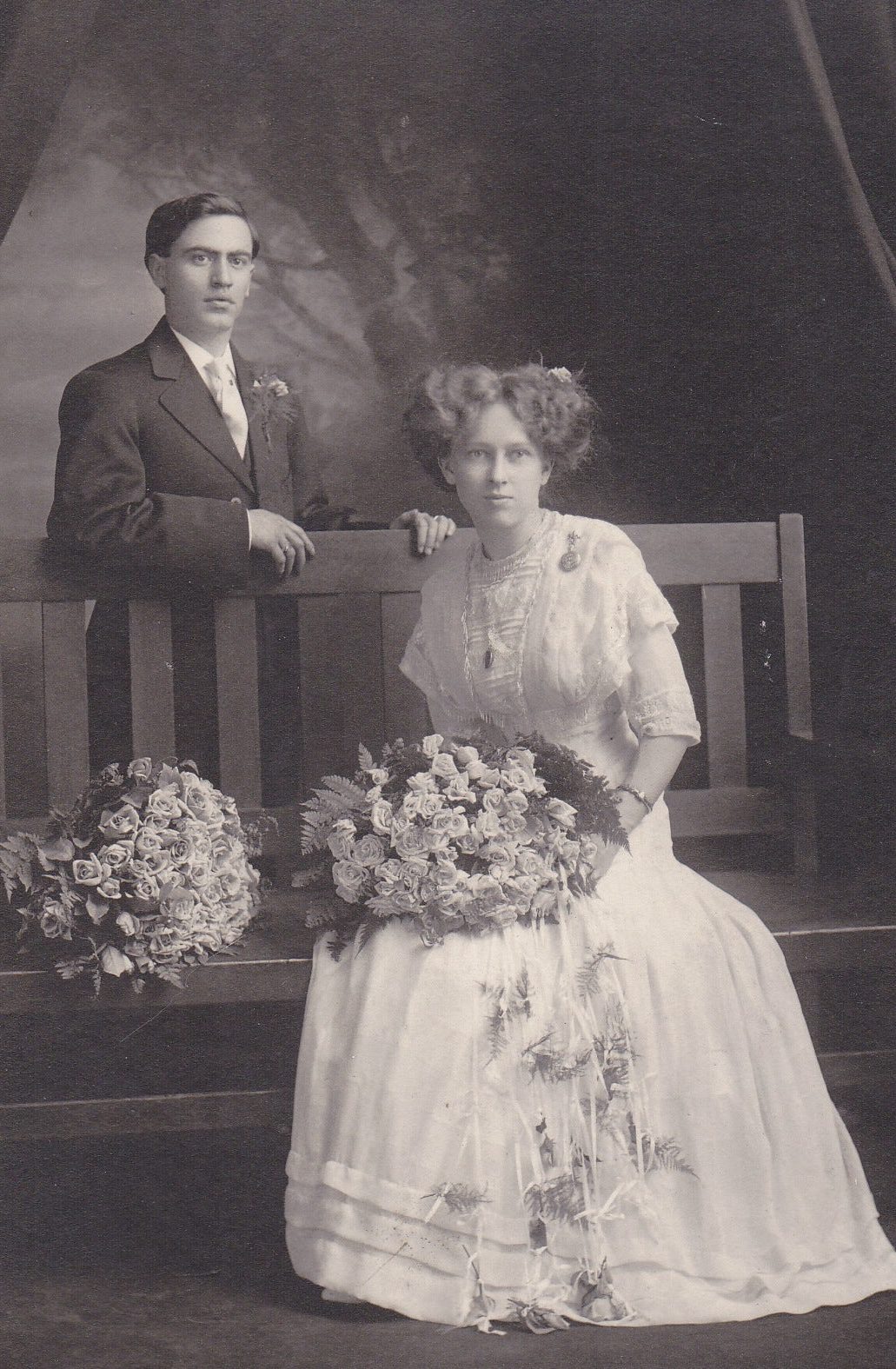
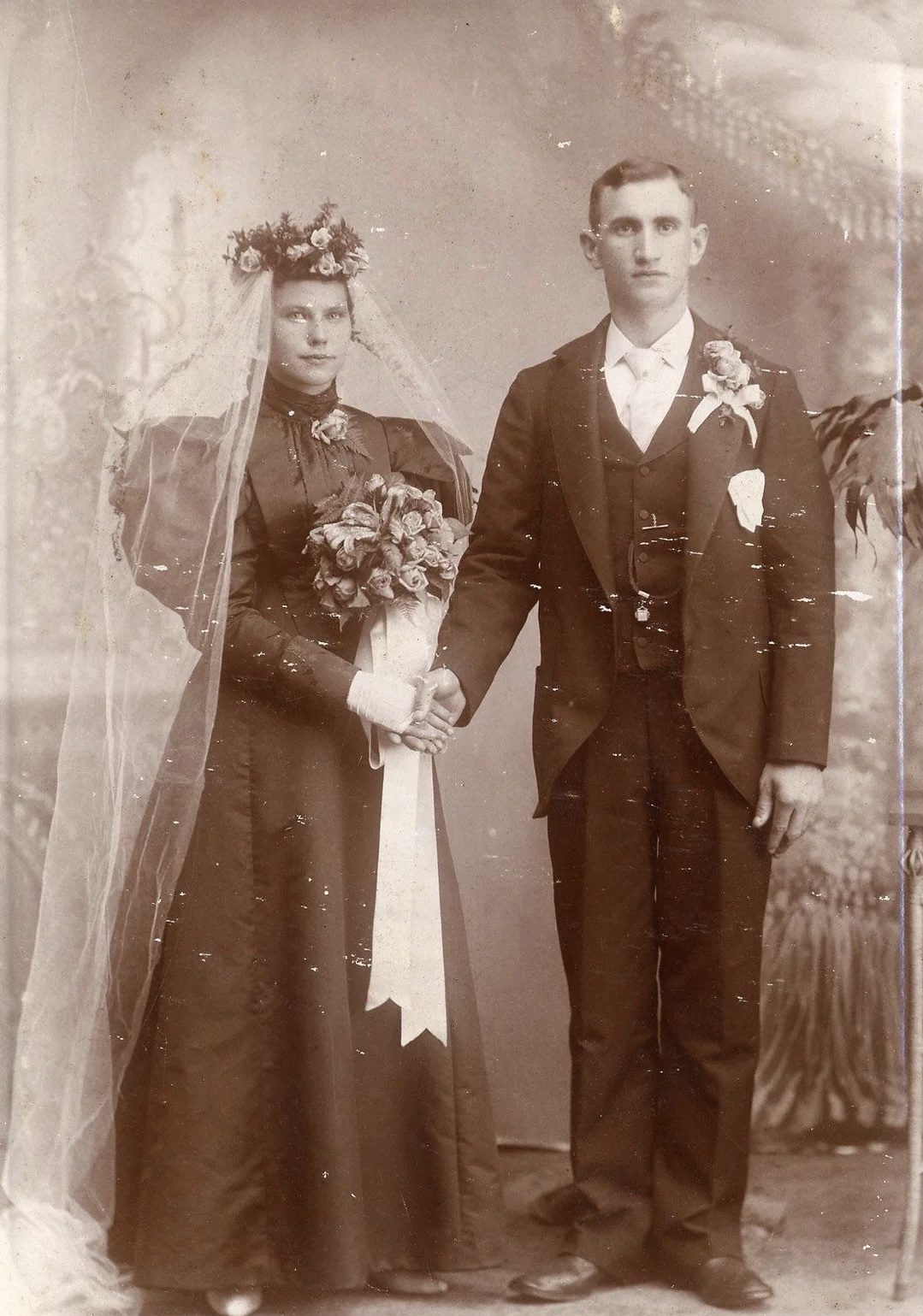
When British Queen Victoria married in a white wedding dress in 1840, she launched a fashion revolution. White, which until then had been perceived more as a symbol of mourning or religious garb, suddenly became synonymous with chastity, solemnity, and elegance. This trend quickly spread among the European aristocracy, and later in the United States. However, archival records and accounts from Chicago residents in the mid-19th century indicate that white did not immediately become the universal choice for brides. They often chose gowns in colors like blue, pink, violet, silver, or even deep burgundy. The choice depended not only on fashion but also on the availability of fabric, family tradition, or ethnic community. For instance, German or Polish brides might choose cream dresses with red ribbons, symbols of family happiness. And girls from Irish families sometimes wore light green gowns as a sign of national identity and a wish for fertility.
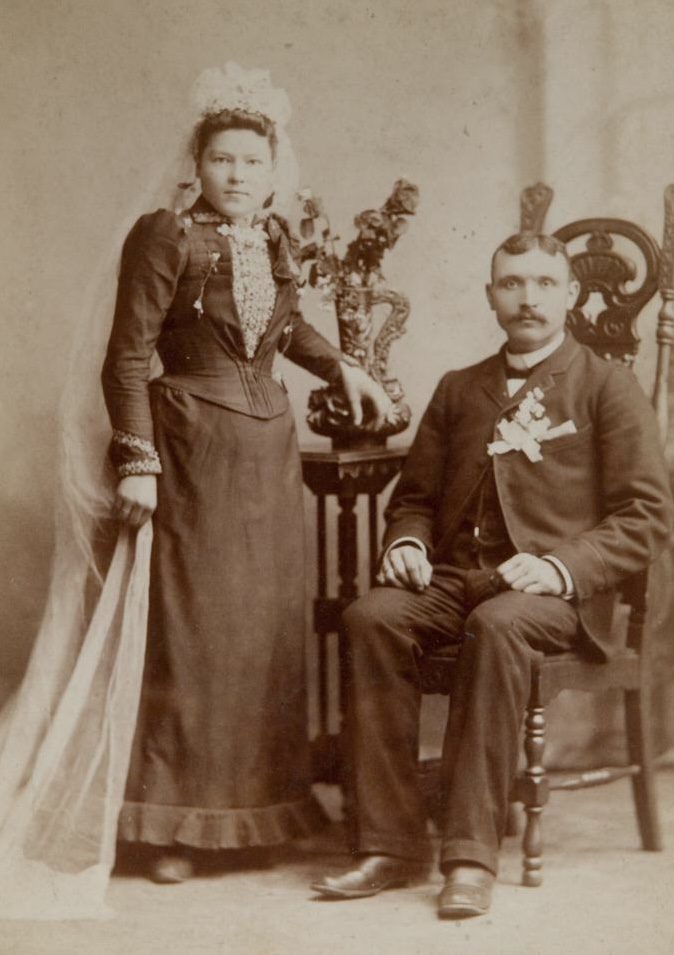
White slowly became popular only among the wealthier classes. Such a dress required meticulous care, was difficult to wash, and was not always practical for re-wearing. Therefore, a white wedding dress was also a demonstration of affluence: signifying that the family could afford a dress worn only once. One of the most characteristic features of Chicago wedding fashion was its functional continuity. The wedding dress was not put away in a trunk—it was re-tailored, dyed, or shortened. Such a gown could become an evening dress, a holiday dress, or even mourning attire. This embodied the spirit of the time: a combination of romance and practicality, emotion and economy. By the end of the 19th century, the white wedding dress was firmly established as the norm among the middle and upper classes. It became a symbol of moral purity, maidenly modesty, and simultaneously, the family’s financial capability.
The Wedding Feast
The format of the wedding feast depended primarily on financial means. Wealthy families, particularly in prestigious neighborhoods like Prairie Avenue or the Near North Side, rented ballrooms in hotels such as the Palmer House, Tremont House, or Sherman House. These events resembled true balls: with exquisite decor, porcelain china, an orchestra, and a luxurious menu. Guests were served by waiters, and tables groaned under dishes of French or Anglo-American cuisine.
Among the middle class, the banquet often took place in a large parlor or a church hall. Tables were set with a more modest menu, but celebratory staples were mandatory: roasts, preserves, pies, seasonal vegetables, baked apples, and homemade cider, beer, or wine. The focus was not on lavishness but on the warmth of the reception and generosity, which was considered a sign of the family’s dignity.
For the working class, especially among immigrants, the wedding dinner was a communal effort by the entire neighborhood. Cooking was done together, dishes were brought by guests, and tables were set up outdoors or in the church hall.
Dancing inevitably followed the feast. Music was performed live: by ensembles, family orchestras, or even street musicians. The repertoire varied from popular American waltzes and quadrilles to ethnic dances. These dances often had a specific ritualistic quality: for example, the money dance, where guests paid for the chance to dance with the bride, or the “vyvodna” (leading out), where the bride was led from her birth family into her husband’s family to music and singing.
Also, learn about Raquel Welch, the Hollywood beauty who conquered the world with her talent.